Tuesday 29 November 2011
Black Muntjac - A Redheaded Deer
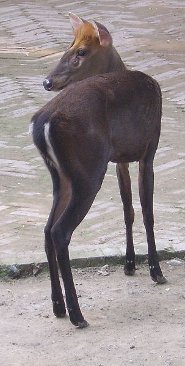
The Black muntjac (
Muntiacus crinifrons) is a relatively rare, small member of the deer family that lives in eastern
China. It is known by a variety of other names, including the hairy-fronted muntjac, the red-headed blue muntjac, the black aurum muntjac, as well as the head-hooded muntjac. Its body is a dark brown to black and it has light orange markings on the top of its head, on its ears, and on the sides of its nose. The black muntjac's tail is long and is white on its underside. This animal's most distinctive feature, however, is a tuft of long reddish-brown hair that grows between its ears. In the winter, the black muntjac’s coat is darker and thicker that it is in the summer.
On average, the black muntjac has a body length of 100 to 110 centimeters, or approximately 3 and half feet, and stands approximately 60 centimeters, or about 2 feet, at its shoulder. It weighs on average between 21 to 26 kilograms or approximately 24 pounds. Male black muntjacs are typically smaller than the females.
Male black muntjacs have front canine teeth that grow out from their mouth in a tusk-like fashion. During territorial disputes, the male black muntjac will often fight an opponent with these tusks. Males also have small antlers, but it is believed that they do not fight with these. The black muntjac can be found in several eastern provinces of China, including western parts of Zhejiang, the northern regions of Fujian, northeastern Jiangxi, and in southeastern Anhui. Some people have reported seeing the black muntjac in China’s Yunnan province and the country of
Myanmar, but these sightings may have actually been of a similar animal called the Gongshan muntjac.
Black muntjacs live in hilly, mountainous forests, shrubby areas and jungles with dense undergrowth that occur between 800 to 1000 meters -- about 2624 to 3280 feet -- above sea level. It is a shy animal, always on alert for danger. When frightened, it will seek the shelter of the thick undergrowth.
The black muntjac is a solitary animal. The female can breed at any time of the year and then will give birth to one baby at a time. When born, the fawns have spotted coats that help them blend in with their surroundings. The male black muntjac is very territorial and will fight other males and possibly even other species of deer that have invaded their territory.
Black muntjacs feed on the branches, leaves, fruits and flowers of plants and trees. It is preyed upon mainly by the
dhole, a member of the canine family, and possibly the
leopard.
Humans also hunt and trap the black muntjac for its skin and meat.
Picture of the black muntjac by Shizhao, licensed under
GFDL.
You can help spreading the word about this animal by liking it on facebook
Permanent Link
Monday 28 November 2011
Bolivian Squirrel Monkey - The Masked Monkey
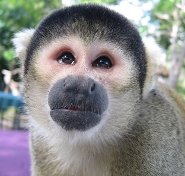
The Bolivian squirrel monkey (
Saimiri boliviensis), which is also known as a black-capped squirrel monkey or black-headed squirrel monkey, is an energetic, social monkey that lives in South America. Bolivian squirrel monkeys can live in a variety of habitats, but prefer tropical rainforests that occur between sea level to 1500 meters, or 4920 feet, above sea level. These monkeys can be found in
Bolivia,
Brazil, and
Peru. Bolivian squirrel monkeys spend most of their time up in the tree canopy, but do occasionally make their way down to the forest floor in search of food.
These primates have an average body length of 27 to 32 centimeters, about 10.5 to 12.5 inches. It weighs on average 950 grams or about 2 pounds. The Bolivian squirrel monkey’s coat is a mixture of gold and tan hues and is tipped in black. The coloring around its mouth and nose is black or dark brown, while the fur surrounding its eyes is white.
One of the main ways to distinguish the
Saimiri boliviensis group from other squirrel monkeys is by this white mask around its eyes. The mask of a
Saimiri sciureus monkey has a dramatic V shape between its eyes, while a Bolivian squirrel monkey’s white mask has a more rounded shape. The fur above the Bolivian squirrel monkey’s mask is gray on the females and black on the males. Bolivian squirrel monkeys have very long tails tipped in black. Their tails are noticeably thinner than those of the squirrel monkeys of the
Saimiri sciureus group.
These little monkeys feed on a variety of things, including seeds, insects, berries and fruits. Bolivian squirrel monkeys have also been known to dine on small animals, such as birds or bats, and also on eggs. The Bolivian squirrel monkey is a gregarious, social animal that likes to live in large groups of typically 40 to 50 animals, although larger groups of 200 or more do occur. Unlike some animals, more than one male is allowed to live with the group, with young male monkeys often remaining with their family group until they reach the age of four or five. After that, young males usually leave the family group to live with other bachelors. Females usually remain with their family groups.
Bolivian squirrel monkeys typically have one baby, and the females will babysit each other’s infants. These monkeys can live to be 30 years old. Bolivian squirrel monkey predators include harpy eagles and snakes, as well as
humans, who not only hunt the monkeys for meat, but also capture them to sell as illegal pets and for use as laboratory research subjects. The Bolivian squirrel monkey’s current status is of least concern on the IUCN’s Redlist, as it is still quite common in the wild. Currently, the main threat to the Bolivian squirrel monkey’s population is habitat destruction from logging and clearing for agricultural use.
Picture of the Bolivian Squirrel Monkey by Ryan Hyde, licensed under the
Creative Commons Attribution-ShareAlike 3.0 License.
You can help spreading the word about this animal by liking it on facebook
Permanent Link
Friday 25 November 2011
Siberian Flying Squirrel - Another Reason to Save Old World Forests
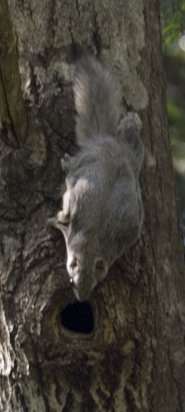
The Russian or Siberian flying squirrel (
Pteromys volans) only glides rather than flies in the way birds fly. Natural predators such as owls, hawks, domestic cats and weasel-like martens patrol tree trunks in search of a tasty squirrel. The Siberian flying squirrel can quickly escape by leaping from one tree trunk, spreading out its thin flap of skin by stretching out all of its limbs, and gently gliding to another tree trunk well out of the predator’s reach.
But they cannot glide away from humans. Siberian flying squirrels need to live in tree trunks, preferably of pine, cedar or spruce. They need to live in tall, older trees that are large enough to support their diet and nesting sites. They need to live with woodpeckers because Siberian flying squirrels prefer to use an abandoned woodpecker nest hole rather than try to make one themselves. Humans have been cutting down trees at an alarming rate and reducing the food and living space of the little rodent.
Physical Description
Siberian flying squirrels strongly resemble the more familiar
North American grey squirrel. It has far larger eyes and has white patagiums or gliding membranes from its forelegs to the end of its hind legs. When the squirrel is not gliding, the membrane becomes bunched up and gives the squirrel its common name of “flying mitten.” Its head, back and side fur changes color according to the season. In the winter, it is a pale silver-grey while in the summer it is a yellowish grey. Their flat tails are covered in pale fur.
This is a small rodent only weighing an average of 4.58 ounces (130 grams.) Its body length, including the tail, ranges from 4.72 inches (120mm) to almost 9 inches (228 mm.) They produce very distinctive droppings found ringing tree trunks. The droppings appear like golden-brown grains of rice. Looking for the droppings helps clue scientists, conservationists and forestry managers as to which trees the flying squirrels inhabit.
Life Cycle and Behavior
There still is a lot unknown about the Siberian forest squirrel, primarily since it’s shy and nocturnal. It lives it’s four or five year life span entirely in the tree tops and can theoretically never need to come down to the ground. Siberian flying squirrel females can produce one or two litters per year. The average litter size is three, but litters of six have been reported. After one month, the mother weans the babies.
Siberian tree squirrels are omnivorous, but are primarily vegetarians. Everything they eat is provided by the trees they live in – nuts, seeds, bark, buds, twigs, pinecones, berries, sprouts, bird eggs and hatchlings. Siberian tree squirrels take over abandoned red squirrel nests (dreys) as well as woodpecker holes. They live in mated pairs and any nursing babies. Some will also nest in attics or commercially made bird houses. Siberian flying squirrels used to be found in upper Europe, Asia and down to Japan. They are now found in countries committed to preserving forests, such as
Finland and
Estonia.
Picture of the Siberian flying squirrel by Marko Schrader, licensed under
GFDL.
You can help spreading the word about this animal by liking it on facebook
Permanent Link
Thursday 24 November 2011
Zebra Duiker - Fruit-cracking Specialist
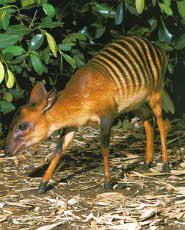
The zebra duiker (
Cephalophus zebra) is a small, strikingly marked antelope with a coat striped like a zebra. Unlike the white background of a zebra’s coat, however, the base color of this duiker’s coat is more tiger-like, ranging from a pale cream or gold to dark reddish hues. The dramatic dark stripes on the zebra duiker begin just behind its shoulders and continue to the end of its rump. The approximately 12 to 15 stripes run over the top of the zebra duiker’s back and down each side. No two zebra duikers will have the same markings. In addition to the stripes, the zebra duiker has dark markings on the top of its legs and on its muzzle.
For the first two months of its life, the coat of a baby zebra duiker has a bluish hue to it. As the animal ages, the coat gradually changes to the lighter coloration of the adult zebra duiker. The zebra duiker is a compact, stocky animal, with a rounded back and short limbs. It stands approximately 40 to 50 centimeters or about 1.3 to 1.6 feet at its shoulder. The adults weigh an average of 17.5 kilograms or 38.5 pounds. In general, the females are larger than the males. Both the male and the female zebra duikers have short horns. Unlike other duikers, the zebra duiker does not have a tuft of hair on its forehead.
This small, striped antelope's range is from eastern
Sierra Leone to southwestern
Cote d'Ivoire, and includes much of the country of
Liberia, as well. Zebra duiker sightings have also been reported in the Ziama and Diecke Forest Reserves in the country of
Guinea. Zebra duikers prefer to live in primary lowland forests, but can also be found in some montane and upland forest areas. They are very sensitive to habitat destruction and prefer to live in areas that have not been disturbed by deforestation. The zebra duiker feeds on fruit, as well as leaves and grass. Because the zebra duiker is so small, it depends a lot on other animals accidentally dropping fruits and other edible treats from trees. The skull of the zebra duiker has a hard frontal bone, which it uses to crack apart hard-to-open fruits.
Because the zebra duiker is so small, it has many predators, including Africa's many species of big cats and even its birds of prey. The zebra duiker is also poached by humans for its meat. Currently, the zebra duiker is listed as vulnerable on the IUCN's Red list. The IUCN site states that over the last 15 years, the little antelope's population has fallen as much as 30 percent. The main culprits behind the zebra duiker's decline are deforestation, which has led to increased loss of habitat, and hunting. Although, Liberia still has a swath of suitable habitat for zebra duikers, it is believed that in other areas, the little antelope's population will continue to fall and that its status will eventually decline to Endangered or Critically Endangered.
Picture of the zebra duiker by Kispál Attila, licensed under
GFDL
You can help spreading the word about this animal by liking it on facebook
Permanent Link
Wednesday 23 November 2011
Dusky Titi - South American Romantic Monkeys
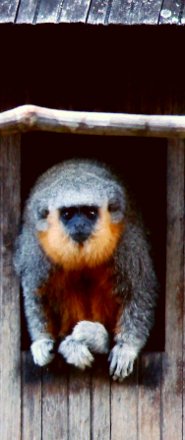
There is a lot biologists still need to learn about the red-bellied or dusky titi (
Callicebus moloch) except for one thing – they mate for life. Dusky titis in captivity become frantic if they are ever separated from their mates. These small, South American monkeys mate for life. If lucky, that monogamous life can last 25 years.
Dusky titis are dependent on forests in order to survive. They are under threat because of deforestation in their native countries of Bolivia, Peru, Paraguay, Columbia, Brazil and Venezuela. They are hunted by humans for their meat and skins. Their natural predators are large birds of prey, including the Guianan crested eagle and the
ornate hawk-eagle. Dusky titis spend the majority of their lives in trees, which removes them from ground-dwelling predators.
Physical Description
The dusky titi is a small monkey with a tail often as long as or even longer than the body length. Males tend to grow larger and heavier than females, although females sometimes grow longer tails than males do. Males grow a body length from 11.8 to 17.7 inches (30 to 45 cm) while their tails reach lengths of 15.35 inches to 19.68 inches (39 to 50cm). In contrast, females only grow to 11.4 to 16.5 inches (29 to 42 cm) with a tail length of 14 to 25.1 inches (36 to 64 cm). Males weigh up to 2.65 pounds (1200 grams) while females only weigh 2.25 pounds (1020 grams).
Dusky titis have black skin, which shows in their ears, faces, genitals and hands. Their thick, bushy fur color varies from individual to individual. Monkeys can be a rusty red, orange red, squirrel grey or a combination of red and grey. Sometimes their belly, sideburns and inner limb fur is a brighter color than their backs or tails. Some other individuals sport only one color fur. Their eyes are usually brown.
Life Cycle and Behavior
Dusky titis primarily eat fruit, young leaves and buds, but will also eat spiders, insects and insect cocoons. Because of the low nutritional content of their diet, dusky titi monkeys need to spend 2 to 3 hours per day eating in order to survive. Monkeys sleep in nests made from vines wrapped up in tree branches. They wake at dawn and spend the next 12 hours in activity until finding another site for sleeping. Throughout the day, both males and females constantly call to each other.
Females give birth to a single baby after 128 to 133 days gestation. Females will eat more insects in this stage than they will at any other point in their lives. Both males and females help carry and protect the babies. Sometimes dusky titi families are attacked by other monkeys, such as the
tufted capuchins, which rarely kill dusky titi monkeys but have been observed doing so. Usually, other monkey species chase smaller ones away from any food source they have discovered. Males and females spend a large part of the day grooming each other, which helps strengthen their bond.
Picture of the dusky titi by Ana Cotta, licensed under the
Creative Commons Attribution 2.0 Generic license.
You can help spreading the word about this animal by liking it on facebook
Permanent Link
Tuesday 22 November 2011
Splendid Fairywren - Nature's Romeo
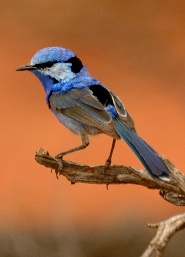
The splendid fairywren (
Malurus splendens) is a small breed of bird in the passerine family. Orginally the bird game from Western
Australia, though they now live around the country, as far west as New South Wales and as far south as Queensland. Unlike other birds however, the splendid fairywren is not found of humans and are often only found in areas where there are lots of vegetation to protect them.
When many people think of this breed of bird, they automatically think of a small bright blue creature, similar to the blue jay. This is only partly true. While the male splendid fairywren is bright blue in color, this only happens during breeding. Normally the non-breeding male birds are brown in color, with a blue tail and ears. When the birds are ready to mate, both male and female molt, with males showing their new blue shade. If this alone isn't enough to impress the ladies, male birds have also been known to bring the female flowers. It's not uncommon to see a male gathering pink and purple flower petals to bring home to the females. This is usually done most around mating season, though it's not uncommon for males to do this year round, even while not breeding.
Male splendid fairywren continue this act of wooing the females, even while hunting for food. Like most birds, feed upon small insects, such as ants and spiders. They may also eat bird or flower seeds if they're around, but since these birds dislike human surroundings, they usually make due with what is found in nature. Once this food is found, both male and female will return home to rest and cuddle.
When it comes time to breed, usually in late August through January, the female splendid fairywren builds a round dome like nest out of grass and spiderwebs. These nests are often built close to the ground, but in heavily concealed locations, such as Hakea shrubs. This is to protect them from their main predators of bigger birds, including the
gray butcherbirds,
kookaburras, ravens and magpies. These birds commonly feed upon the splendid fairywren, though it's not uncommon for the male fairywren to distract the predators in an effort to protect the female.
Unlike most animals, splendid fairywren are socially monogamous. Once a male and a female have fallen in love, they will stay together until they die. Despite this romantic nature, females have no problem being sexually promiscuous, often mating with other males during the breeding season. Two to four eggs are usually laid during the breeding process, with incubation period for the eggs being around two weeks.
Once the babies are born, it is the males, not the females, who raise them. There are usually several male birds who work together to raise the young. While only one of these birds is the biological dad, the males don't seem to mind. The female splendid fairywren on the other hand, watches from afar, assisting only occasionally.
Despite this breeds dislike of humans and their struggles to adjust to urban areas, they're doing well and are currently under no threat of becoming endangered anytime soon. In fact, the splendid fairywren currently ranks "Least Concern" on the conservation status scale, which is the highest any animal can rank.
Picture of the splendid fairywren by Aviceda, licensed under the
Creative Commons Attribution-Share Alike 3.0 Unported license.
You can help spreading the word about this animal by liking it on facebook
Permanent Link
Monday 21 November 2011
Northern Fur Seal - Once Near Extinction, Now Thriving
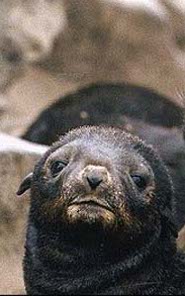
The northern fur seal (
Callorhinus ursinus) are a type of marine mammals that makes up the largest members of the fur seal family. As the name implies, the majority of this breed of seal lives in the northern parts of the Pacific ocean, though they have been found traveling in the Bering Sea and Sea of Okhotsk as well, especially during the colder months. This is partly due to the abundance of food in the area, including the fur seal's favorite, pelagic fish and squid. Other fish may also be eaten, such as lantern fish or herring. The seals must be careful in both land and water however, as they are preyed upon by sharks,
orcas,
steller sea lions and even
artic foxes.
One odd thing about the northern fur seals is how much the males differ from the females. It's not uncommon for male seals to be as much as 40% heavier than females, and also nearly five times as long. This doesn't prevent the species from breeding often however. Females reach their peak at an earlier date, around two to five years, while it takes males four to five. Strangely enough however, males usually won't attempt to breed until they're at least eight years of age.
The most remarkable thing about the Northern fur seal is that the species was once on the brink of extinction. Like most seals, they were fiercely hunted for their fur, especially around the Alaskan and Russian area. This was increased ever farther in 1786, when a breeding ground was discovered. This resulting in the death of thousands of creatures. It's been reported that in the early nineteen hundreds, there were as little as 216,000 alive.
Lucky for the seals, an international treaty was signed in 1911 to put a halt to the unnecessary slaughter of the animals. This was a historic event for both man and animal, as this was the first international treaty addressing wildlife preservation problems.
The seals have since bounced back and are now thriving. While the species is still on the "threatened" list, they have been upgraded to "Vulnerable," the highest level a creature can have while still remaining "threatened." If breeding continues as the current rate, the seals should have nothing to worry about.
When it comes to the male northern fur seal, nothing stops them from claiming the girl of their dreams. The seals are very protective of potential mates, sometimes doing more harm than good. It's not uncommon for two male to accidentally kill the female in the process while fighting, or playing tug-of-war with her.
You can help spreading the word about this animal by liking it on facebook
Permanent Link
Thursday 17 November 2011
Dassie Rat - African Family of Rock-Dwelling Rodents
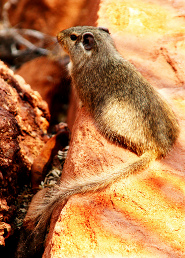
In the rocky outcroppings of
Namibia,
Angola and northwest
South Africa lives a large dirt-brown or duty grey rodent that strongly resembles a very large guinea pig with a fluffy tail. It’s called the rock rat or dassie rat (
Petromus typicus). “Dassie” is an Afrikaans word meaning “hyrax”, which is another species of brown furry mountain-dwellers that lives in Africa. There are at least fourteen known subspecies of dassie rat but all can interbreed and all are generally classified as Petromus typicus.
Unlike many other African species, dassie rats are thriving as a species, even entering into urban dwellings. There they are often prey to domestic cats. The chubby rodent has the ability to flatten its ribs, making it able to hide in very narrow openings. Another survival quirk is that they can go for long stretches without drinking water. They derive all the water they need from their diet of grasses, leaves, tender stems and occasionally insects.
Physical Description
Dassie rats have narrow heads, rose-petal shaped ears and large eyes in relation to their heads. Their short, silky fur differs in coloration depending on what subspecies it is. Fur varies from a sandy tan to a chocolate black. Their bellies are devoid of fur. Like other rodents, the front teeth continue growing throughout the dassie rat’s life, but the cheek teeth do not. They have four digits on each paw that end with a claw. The rocks and hills of the dassie rat’s environment naturally wear down the claws. The fur around the hind claws is longer and stiffer than anywhere else on the body. Since dassie rats groom themselves with their hid claws, it is throised that the stiff hairs help act as a comb.
Adults weigh from 6 to 11 ounces (170 to 300 grams) and grow to a length of 5.5 to 8.3 inches (14 to 21 cm). Their tails, though, can grow to 6.69 inches (17 cm). Females have a very unusual anatomical feature – their nipples are on the sides of their bodies instead of on the belly. This helps a mother dassie rat nurse her young in rock crevices or other extremely narrow places where she makes her den.
Life Cycle and Behavior
Dassie rats like the company of their own kind. They live in small colonies of a few adults and babies. The largest colony reported was 22. A solitary dassie rat would soon be a dead dassie rat, as one rat could not watch out for predators such as snakes or birds of prey or attacking hyraxes. Although hyraxes do not eat dassie rats, they can chase dassie rats from food sources and dens.
Dassie rats sleep during the day and are most active at dawn and dusk. Females can have up to 3 babies in a litter, but usually have only 2. Her gestation is unusually long for a rodent – three months. When the babies are born, they are fully furred, with their eyes and ears open and can run within hours.
PIcture of the dassie rat by
Vernon Swanepoel, licensed under the
Creative Commons Attribution 2.0 Generic license.
You can help spreading the word about this animal by liking it on facebook
Permanent Link
Wednesday 16 November 2011
Small-toothed Sportive Lemur - The Mysterious Weasel-like Lemur
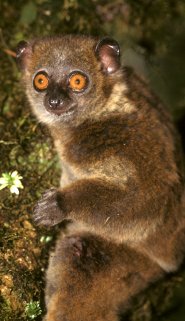
The small-toothed sportive lemur (
Lepilemur microdon), also called the light-necked sportive lemur, is an extremely rare lemur only found on the southeastern forests of
Madagascar. There are 26 species of sportive lemurs, all of which live on the island of Madagascar. They get their common name “sportive” because they are highly active little mammals, living in the treetops. There are no small-toothed sportive lemurs in captivity and an unknown amount still in the wild.
This is an ancient species which is facing extinction due to habitat loss and from poaching. All lemurs need a large space filled with many type of trees in order to find enough to eat. Tree species flower and bear fruit at differing times or else the lemurs would starve. There is still a lot to be learned about the small-toothed sportive lemur but it may be gone forever if the forests of Madagascar are felled for farming.
Physical Description
A small-toothed sportive lemur looks like a cross between a monkey and a weasel. They have the long necks and long faces of a weasel, but the bodies and flexible hands of a monkey. Their short but dense fur varies in shades of brown from tan to chestnut on their backs and sides, but turns a pale grey to white on their necks, bellies and inside of the legs. Adults have a dark brown to black dorsal stripe going down their backs to their tails. Their large eyes are bright yellow to pumpkin orange. Like most primates, including humans, lemurs have binocular vision. Their muzzles and hands are black. Their hind legs are built like a kangaroo’s so that when on the ground, they walk with their forelegs and hop with their hind.
Adults weigh from 2 to 2.6 pounds (0.9 to 1.2 kilograms), which is lighter than a domestic cat. From head to tail-tip, adults measure 22 to 25 inches long (55 to 64 cm.) As their common name suggests, the small-toothed sportive lemur does have small teeth in comparison to other lemur species known at the time of its discovery in 1894. Their hands possess five long mobile fingers, excellent for scratching fur, grasping onto narrow tree limbs and grasping food such as leaves, flowers and fruit.
Behavior
Unlike many other primates, this is a lemur that prefers to live alone. Males use loud crow-like calls to mark the borders of their territories. Females also have territories. Males can overlap female territories when they come into season but males cannot trespass into another male’s territory, or they will fight.
Small-toothed sportive lemurs spend most of their lives leaping from tree to tree. They sleep during the day to avoid birds of prey and search for food at night. This species of lemurs also shares a trait with rabbits and guinea pigs – they excrete a special dropping called a cecotroph. This helps them to digest their tough, plant-based diet. If they do not eat their cecotrophs, they can die.
Picture of the Small-toothed Sportive Lemur by Edward E. Louis Jr., licensed under
Creative Commons Attribution-Share Alike 3.0 Unported license.
You can help spreading the word about this animal by liking it on facebook
Permanent Link
Monday 14 November 2011
Greater Mouse Deer - Gives Peek at What Extinct Animals Were Like

The greater mouse deer (
Tragulus napu) is not a true deer, although it has some deer-like characteristics. Also called the Malay tapu (tapu is the local name for the animal) this curious and cute creature is classified as an ungulate. Ungulates are any creatures with hooves. Deer are also classified as ungulates. But unlike deer, female greater mouse deer are larger than males. They also do not have a specific rutting season. The greater mouse deer breeds any time.
Although not considered endangered, the greater mouse’s natural habitat is being destroyed at an alarming rate. Although extinct in
Singapore, it can still be found in the dwindling forests of Borneo, Sumatra,
Thailand, the Indonesian islands and the Malaysian Islands. They eat leaves, bugs, shrubs, twigs and grasses, although the latter is rarely found in thick tropical forests. This is the same diet that many now-extinct mammals such as the earliest known horse ate. Today’s mouse deer strongly resemble the fossils of eohippus.
General Description
In profile, this species has a body shaped like a furry brown pear laying on its side with four slim legs. Some people describe the greater mouse deer as a "stretched out guinea pig." The neck is very short, the rump very wide in comparison to the small, narrow head. They have much smaller ears in comparison to true deer. A black stripe connects the black-rimmed ears across the large eyes to the small black nose.
Although tiny for an ungulate, it is the largest mouse deer species in the world. Males stand 12 inches (30 cm) from the bottom of the hoof to the tops of their shoulders. Females can grow as large as 14 inches (35 cm.) Their bodies are longer than they are tall. Males are 2.3 feet (70 cm) long, while females can grow as long as 2.5 feet (75 cm.) Males can weigh about 11 pounds (5 kilograms) while females can tip the scales at 17.6 pounds (8 kilograms.)
Behavior
Not much is known about the behavior of wild greater mouse deer, since these are incredibly shy nocturnal animals. Unlike deer, they live solitary lives instead of moving in herds. They only come together to mate. Instead of antlers, male greater mouse deer have tusks. Gestation is 152 – 155 days long. Females can mate within a few days of giving birth to their single babies. Meanwhile, babies can stand within a half-hour of being born and can run with their mothers from predators like birds of prey, humans, feral dogs and monitor lizards.
Although solitary, greater mouse deer constantly communicate to others of their kind through scent-marking. Along with urine and feces, they rub their chins on branches or rock outcroppings. A gland in their chin produces a scent distinctive to other mouse deer. They also can communicate by sound. When scared, greater mouse deer rapidly drum their hooves on the ground. They can be tamed, but ideally should live in the wild. With luck, they can live up to 14 years old.
Picture of the greater mouse deer by Brian Gratwicke, licensed under
Creative Commons Attribution 2.5 Generic license.
You can help spreading the word about this animal by liking it on facebook
Permanent Link