Wednesday 27 December 2006
North Atlantic Right Whale
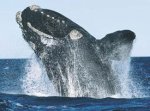
The
North Atlantic Right Whale (Eubalaena glacialis) can grow up to 18 meters and weigh up to 100,000 kilograms. They were named 'right' whale by fisherman, because they thought it was the right whale to hunt, as they swim close to the shore, float when killed and 40 % of their body is blubber. Baleen whales feed with their baleen, they 'skim' the water with their mouth open. Water and prey come into the mouth of the whale, but only the water can pass throught, leaving prey like zooplankton, krill, little shrimps behind. There are about 300 Atlantic Northern Right Whales living today, almost all in the western North Atlantic, and are an endangered species.
You can help spreading the word about this animal by liking it on facebook
Permanent Link
Wednesday 20 December 2006
Order Perissodactyla (odd-toed ungulates)
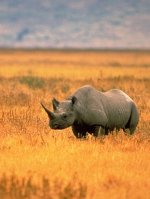
The members of the order of
Perissodactyla all have an odd number of toes on their hooves. Living members are from the families Equidae (horses, asses, zebra's), Tapiridae (tapirs) and Rhinocerotidae (rhinoceroses). If you are interested in extinct species, about 10 million years after the dinosaurs died out, the order of Perissodactyla began to rise, with bizarre species like the
Chalicothere or check out this
giant extinct rhino (twice the size of an elephant).
Featured members are:
- the donkey
- the horse
- the zebra
- the brazillian tapir
- the white rhinoceros
- the black rhinoceros
- the indian rhinoceros
You can help spreading the word about this animal by liking it on facebook
Permanent Link
Tuesday 19 December 2006
Order Lagomorpha (hares, rabbits and pikas)
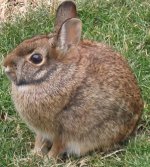
The order of
Lagomorpha consists of two familes: Leporidae (hares and rabbits) and Ochotonidae (pikas). The members of Lagomorpha are sometimes mistaken for rodents, but there are a lot of differences between rodents and members of Lagomorpha. From
wikipedia:
- Lagomorphs (loģ o-moŕ fs)(Gr. lagos, hare: + morphē, form) differ from rodents in that:
- they have four incisors in the upper jaw (not two as in rodents);
- they will only eat vegetation (unlike rodents, who will eat meat and vegetation)
- the male's scrotum is in front of the penis;
- the penis has no bone (baculum) unlike the rodent penis; and
- they will redigest first-time droppings (called cecotropes) to obtain the most from their plant diet.
They resemble rodents, however, in that their teeth grow throughout their life, thus necessitating constant chewing to keep them from growing too long.
Featured members are
You can help spreading the word about this animal by liking it on facebook
Permanent Link
Monday 18 December 2006
Hawaiian Monk Seal

The
Hawaiian Monk Seal (
Monachus schauinslandi) lives in the warm waters of the North-western part of the Hawaiian islands. It has gotten its name, because its head with the small hairs looks like the head of a typical monk. Also, the Hawaiian Monk Seal leads a more solitary life (like monks) when compared to other seals. They can stay under water for as long as 20 minutes without coming to the surface and to a depth of 600 feet. The Hawaiian Monk Seal is one of the most endangered species of seals. Together with the Mediterranean Monk Seal they struggle for survival to prevent extinction like the Caribbean Monk Seal, which became extinct in the 1950s. In 2004 the estimate of the total population of Hawaiian monk seals was 1400 animals. The reasons for their decline are: increased human presence, sharks, Ciguatera poisoning (a bacteria) and fishing nets.
You can help spreading the word about this animal by liking it on facebook
Permanent Link
Monday 11 December 2006
North American Beaver
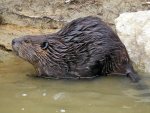
The
North American Beaver (Castor canadensis) lives in Canada, most of the United states and Northern Mexico. It is the second largest rodent in the world, the largest rodent in the world is the
capybara. The North American Beaver has webbed hind feet for swimming and unwebbed front paws (clawed, used for digging and carrying material for dams for example). In some areas they are viewed as pests, because they flood rivers with their dams and are very persistent to repair any damage to the dam. Most of the time, the only way to stop them is to move them to another location. Predators of the North American Beaver are the
Red Fox,
Gray Wolf,
Bobcat and the
Coyote.
Image by LASZLO ILYES (laszlo-photo) from Cleveland, Ohio, USA, licensed under Creative Commons Attribution 2.0 License
You can help spreading the word about this animal by liking it on facebook
Permanent Link