Tuesday 30 November 2010
Barbary Ground Squirrel - Rodent with Refined Tastes

Barbary Ground Squirrel (
Atlantoxerus getulus) has a head and body length measures 160 - 220 mm (6.3 - 8.7 in) and their tails are proportionately larger measuring 180 -230 mm (7.1 - 9.1 in). They are recognized by their white stripes down both sides or their body and sometimes one stripe that runs straight down the back. Their fur is much like other squirrel species being short and stiff. They are precocious mammals who do not let their miniature stature, weighing a mere 300 -350 g (10.6 -12.3 oz), keep them from making their presence known in their habitats. They are easily seen and forage for food in the daytime hours.
These squirrels are unique in that they have refined food preferences. They are omnivores, but their favorite snack is the rich olive-like fruit off the Argan tree which is native to Morocco. They have also been reported to eat the fruit of this tree and even apples out of the hands of tourists to the region. Barbary Ground Squirrels are photographed often when they seem to pose for their guests seemingly unafraid of people. These squirrels have become an invasive species in some places due to the lack of predators.
The species is plentiful in
Morocco,
Algeria, the
Western Sahara, and other countries off the north-western coast of Africa. They can be found in subtropical climates including tropical dry shrub land and rocky areas of temperate grassland. Burrowing is the favored way to build nests, but they also seem quite comfortable making dens in large groups of rocks. Their families become large when they are established in an area as they breed twice a year and have around 4 pups per litter. This breed of squirrel’s young grow up rather quickly and start families of their own. They have been introduced to other places throughout the world like the Canary Islands where it was introduced in 1965 as a pet to Fuerteventura Island (For an interesting, yet scientific read, go to
this paper on the matter). The squirrels are surprisingly intelligent and outwit would-be predators a lot of the time.
Picture of the Barbary ground squirrel by GanMed64, licensed under
Creative Commons Attribution 2.0 Generic license.
You can help spreading the word about this animal by liking it on facebook
Permanent Link
Monday 29 November 2010
Western Barbastelle Bat - Killing Moths Softly with its Song
The
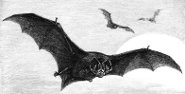
Western barbastelle (
Barbastella barbastellus) is a unique European
bat, notable not only for its wide, forward-facing ears which are connected across its forehead - the "unibrow" of the bat world, so to speak - but also for its singular way of sneaking up on the moths that make up the majority of its diet. Like all bats, barbastelles use echolocation to navigate in flight, emitting high-frequency sounds that bounce off objects and echo back to them, indicating relative position. Unlike other bats, however, the barbastelle’s call is so soft that their prey, which are primarily moths, don’t hear them coming until they’re just about 10 feet away. By comparison, eared moths can hear the echolocation calls of most other bats when they’re about 100 feet away.
Barbastelles are of medium size, typically between 40 to 55 mm long, or 1-1/2 to 2-1/3 inches, not counting its large tail, which, at between 36 to 52 mm (about 1-1/2 to 2 inches) is nearly the length of its body. Their average weight varies between 6 to 13 grams, or about 1/5 oz. to just under 1/2 oz., and the females are larger than the males. Typical wingspans run about 245 mm to 300 mm, or 9-1/2 to nearly 12 inches. Their colors are dark brown to black, and as they mature their fur becomes lighter at the outer tips. This "frosting" of the hairs tends to appear in clusters on their throat and upper chest; in fact, their name originated from the Latin words meaning "star beard."
Though the barbastelle has developed a remarkable evolutionary trait in its ability to quietly hunt prey, it’s a relatively rare species, its population having dwindled due to causes thought to be related both to deforestation and the widespread use of insecticides. In 2008, the most recent assessment, this species was classified as Near Threatened by the International Union for Conservation of Nature (IUCN).
These bats can be found in southern England and areas in Italy, Germany, Norway, Switzerland and other parts of Europe. Their favorite habitats are in older forests, in hollow, loose-barked or storm-cracked trees. Some can be found roosting in caves and even in spaces under residential roofs and near cellars. When hunting, they prefer to fly about 10 to 20 feet above the ground - relatively low in bat terms - because their uniquely soft echolocation calls don’t travel as great a distance as those of their louder bat brethren.
You can help spreading the word about this animal by liking it on facebook
Permanent Link
Friday 26 November 2010
Eurasian Harvest Mouse - Miniature Master of Camouflage
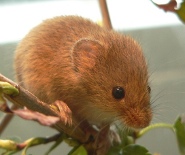
The
Eurasian harvest mouse (Micromys minutus) is nature's miniature master of camouflage. Though tiny, it's a slow-moving mouse, and it has many predators, among them
owls, foxes, cats, and weasels. When the mouse feels under threat, it adopts a defensive posture by remaining motionless, effectively camouflaging itself against the backdrop of its surroundings.
The Eurasian harvest mouse is widely distributed over Europe and Asia. Since this little mouse is remarkably adaptable and can be found in Great Britain, throughout Russia, and all the way to Japan, it isn't considered endangered. Micromys minutus thrives in many types of habitats, from grasslands and wetlands to bamboo stands. If human development encroaches on its natural habitat, this little mouse can make its home in people's gardens or even in drainage ditches.
An adult Eurasian harvest mouse weighs from 5-9 grams (.176-.316 ounce) and reaches a length anywhere from 50-70 mm (2-2.75 inches). Its body is covered in thick, soft fur, which is buff or reddish-brown in color. The mouse has a naked tail, roughly the same length as its body. The tail is semi-prehensile and allows the mouse to easily climb grass stalks and find seeds to eat.
The Eurasian harvest mouse's diet, like its range and habitat, is varied. Its primary fare is grass, seeds, and berries, but in summertime, it eats insects and larvae and sometimes feeds on fungi and moss. It likes to feed in cornfields as well, but farmers don't worry too much about its impact. The mouse doesn't eat enough vegetation to cause major problems, and it actually helps out farmers by eating insects that damage crops.
A round-the-clock rodent, the Eurasian harvest mouse is active throughout the day and night on three-hour cycles. It spends half an hour eating, then it sleeps for the remainder of its cycle. In winter, Eurasian harvest mice don't hibernate. They either build nests out of shredded grass or they congregate in barns or grain silos.
The female Eurasian harvest mouse gives birth to her litter in grass nests constructed approximately 100 cm (39 inches) aboveground. Baby mice that are only three days old can already hang onto grass stalks. The lifespan of Micromys minutus in the wild is short. They're lucky to make it to eighteen months old, and many only make it to six months. In captivity, however, these tiny mice have lived to be five years old.
Picture of the Eurasian harvest mouse by Hendrik Osadnik, licensed under
GNU Free Documentation License and
Creative Commons Attribution-Share Alike 3.0 Unported license.
You can help spreading the word about this animal by liking it on facebook
Permanent Link
Thursday 25 November 2010
Arctic Tern: a Frequent Flyer

The
Arctic Tern (
Sterna paradisaea) is a seabird that can be found throughout the Arctic and the sub-Arctic areas of North America, Asia, and Europe. The species has quite the migration pattern, traveling all the way from the Arctic areas to the oceanic areas of Antarctica and back. This means that the bird travels 70,900 kilometers a year, or 44,300 miles. This is much larger than the migratory pattern of any other animal known to mankind.
One interesting thing about the animal is the fact that it performs almost all of its tasks while in the air. Most of the time it is either flying or gliding. Some groups have a different mating cycle than others. The Arctic Tern nests every one to three years. It nests in the arctic, and once its nesting period comes to an end it once again flies south.
The Arctic Tern is about average in size in comparison with other birds. They are between 33 and 39 centimeters in length, which is 13 to 15 inches. Their wings span a distance of 76 to 85 centimeters, or 26 to 30 inches. For the most part, they have gray and white feathers, while their beaks and feet are a more colorful red. The neck and bottom of the bird are pure white, while the top is typically gray, and the top of the head is black.
They are also known to live very long. Many of them reach the age of thirty. Most of the foods that they eat are fish and various shellfish. The species is also quite populous, with about a million members. The overall population changes as a result of environmental impacts are not known, but there has been a decrease in the numbers of Arctic Terns found in the southern regions.
Arctic Terns are monogamous, mating for life. In most cases, an Arctic Tern will return to the same colony every year. The courtship ritual is quite strenuous, especially when it first occurs. It begins when a female will chase a male to a high altitude to test their agility. The male will then begin to find fish for the female. On the ground, the courtship ritual involves strutting with wings lowered and tail raised. The
birds will then fly circles around one another. Once they have chosen each other, they then choose a nesting area. Both parents defend the nest.
Picture of the Arctic tern protecting nest near Markarfljot river in south Iceland, by OddurBen, licensed under
Creative Commons Attribution-Share Alike 3.0 Unported license.
You can help spreading the word about this animal by liking it on facebook
Permanent Link
Wednesday 24 November 2010
Mountain Weasel - Nocturnal Athlete

The
Mountain Weasel (
Mustela altaica) is a species of weasel that prefers to live at high altitudes, usually over 11,500 feet (3,505 meters). This species is sometimes referred to as the Pale Weasel or Altai Weasel, as well. Mountain Weasels have two coats; they molt their winter coats, revealing their summer coats, when the weather becomes warm each spring. The summer coat may be gray or gray-brown and sometimes consist of some pale yellow, as well. The winter coat is made of up a darker yellow colored fur, as well as some brown.
Male and female Mountain weasels differ slightly in size. The males are typically 12 to 17 inches (30.4 to 43 centimeters) long, from the nose to the tip of the tail. They weigh between eight and 12 ounces (.2 and .3 kilograms). The females range from 12 to 15 inches (30.4 to 38 centimeters) in length and weigh from four to eight ounces (.1 to .2 kilograms). Females feature smaller heads and shorter tails than males.
Mountain Weasels may be found in parts of East Asia, including the Himalayas, Mongolia, Korea, and northern China. They also sometimes appear in parts of Russia. They are most commonly found, however, in Ladakh, India. They reside in tree trunks, rocky caves or crevices, and the abandoned burrows of other animals. Sometimes, mountain weasels even take over the burrows of their prey. This prey may include small
rodents, such as voles, and lizards. In turn, the weasels are occasionally preyed upon by large birds, wolves, or foxes.
Mountain Weasels live where there is an abundance of green vegetation at high altitudes. Their habitat is in danger of terrible depletion, making the future unclear for this species. Mountain Weasels are considered "near threatened" due to a significant decline in numbers in recent years.
The Mountain Weasel may be considered a natural athlete due to its extreme agility and versatility. Both males and females are capable of incredible feats of climbing, swimming, and running. They are natural contortionists and are among the most nimble animals in the world. Mountain Weasels typically sleep during the day, aside from a rare daytime hunt, but they can be observed capering and performing gymnastics nightly. They are solitary creatures except for when mating, though, so one mustn't expect a group show.
Mountain Weasels are beautiful, remarkably agile creatures whose high-altitude habitat must be protected in order to ensure that they are allowed to continue to romp and hunt on the Asian mountain slopes where they reside.
Picture of the mountain weasel by Karunakar Rayker, licensed under
Creative Commons Attribution-Share Alike 2.0 Generic license.
You can help spreading the word about this animal by liking it on facebook
Permanent Link
Tuesday 23 November 2010
Asian Glossy Starling - the Community Bird

The
Asian Glossy Starling (
Aplonis panayensis), also known as the Philippine Glossy Starling, is a
bird in the Sturnidae or starling family. Both male and female birds have metallic, dark green feathers that can look black or purple. The eyes are bright red. Immature birds have an underside that is striped black and white, and upper feathers that are brownish-black. The bird is a medium sized, about 20 cm long. They have slim bodies and narrow wings, which help their flight, usually at tree-top level, to be swift and direct. The Starling family is considered one of the noisiest families of birds. The Asian Glossy Starling has a call like a short whistle when perched, and ringing or piping call when in flight. Like other birds in the Sturnidae family, they can mimic other sounds.
These birds are community oriented, and congregate in groups of around 20. The flock will roost in a tree together, feed together, and fly together. Before landing in a roosting tree, the flock will perform an intricate dance over the tree, flying in symmetrical patterns. The birds set up their nests near the rest of the flock, and brood all year long, mostly from March to June. They build nests in sheltered, elevated places, such as holes in trees or under eaves of man-made structures. Nests vary in intricacy from a little grass added to a hole, to detailed nests made from grass and paper. The female lays three dark blue eggs with brown spots.
Their diet consists predominantly of soft fruits, such as mango, papaya, and banana, as well as berries, figs, and insects. They prefer perching in trees, and rarely land on the ground. Only fallen fruit tempt them to the ground, and then they hop awkwardly.
The Asian Glossy Starling lives in India, Thailand, the Philippines, Indonesia, and the surrounding countries. The preferred habitat of this bird is tropical or subtropical moist lowland or mangrove forests. These birds do not migrate. A large population of the Asian Glossy Starling lives in cities, making nests in abandoned buildings and trees. This species has a endangered species status of least concern, as it has adapted well to human development. On fruit plantations, it is even thought of as an invasive bird.
Picture of the Asian glossy starling by Dr Yap Lip Kee, licensed under
Creative Commons Attribution-Share Alike 2.0 Generic license.
You can help spreading the word about this animal by liking it on facebook
Permanent Link
Monday 22 November 2010
Azara's Agouti - The Jungle's Gardeners

Measuring up to half a meter, or 20 inches, in length and weighing in at 3 kilograms, or 6.5lb, it is difficult to believe that
Azara's agoutis (
Dasyprocta azarae) are actually close relatives of mice and hamsters. However, it is absolutely true; they are members of the single largest mammalian order - the rodents.
Azara's agoutis are native to South America and are found in the rainforests of Argentina, Brazil and Paraguay. South America seems to be a veritable breeding ground for giant rodents, as the world's largest rodent, the capybara, is also found there. Even Azara's agouti is dwarfed by the 1.3 meter (4.3ft) long capybara.
The Azara's agouti's most prominent feature is perhaps its ears, which are large giving it good hearing, so that it can detect and evade predators. Its coloration aids it in this, with the speckled brown fur providing good
camouflage against the surrounding foliage. Interestingly, Azara's agoutis have five fingers, like us, on their hands but only three fingers on their feet. Retention of the extra fingers on the forelimb provides extra dexterity for the processing of food. When Azara's agoutis eat they hold food in their forepaws while resting on their hindlimbs.
Despite being active during the day, Azara's agoutis are notoriously difficult to study as they are naturally extremely shy and will flee when humans approach, perhaps letting out a little bark as a form of alarm call. Their shyness may be related to their solitary lifestyles but is also due to the fact that they are heavily preyed upon by many carnivorous species, including humans.
Azara's agoutis live in burrows or hollow tree trunks, which provide some protection from predators, particularly for mothers with young. Female Azara's agoutis gestate their young for ninety days, after which they give birth to up to 4 young per litter. In common with guinea pigs, but in contrast to mice, the young are precocial. This means they are relatively mature, with open eyes and a covering of fur, which aids temperature homeostasis.
Azara's agoutis are diurnal, that is to say they are active during the day, and they are herbivorous. Fascinatingly, they are thought to be only the only animal native to Brazil that can open a brazil nut. They are well adapted to this task with extremely sharp teeth and extraordinary strength. Azara's agoutis will also eat other nuts, fruit and seeds. This has earned them the name ‘jungle gardeners' because they spread seeds throughout the jungle aiding the dispersal of a plethora of plant species.
Perhaps the strangest thing about Azara's agouti is the name. This species is named after Felix de Azara (1742-1821). During his life he worked as a Spanish military officer, an engineer and a naturalist. The Azara's agouti is not the only species to be named after him; others include the Azara's ground mouse and Azara's spinetail. His work was held in high regard by the great Charles Darwin and an area of the moon is even named after him: Dorsum Azara.
Picture of the Azara's agouti by
Abujoy, licensed under
Creative Commons Attribution ShareAlike 2.5
You can help spreading the word about this animal by liking it on facebook
Permanent Link
Friday 19 November 2010
The Bar-tailed Godwit - Winged Marathoners

The
bar-tailed godwit (
limosa lapponica) is a wading bird with a long bill and long legs. It gets its name from the striped ("barred") markings on its tail feathers, which distinguishes the bird in appearance from the black-tailed godwit and other relatives.
The size of the bar-tailed godwit differs by sub-species, but on average, the birds are between 35-40 cm (13-16 inches) from bill to tale, with an average wingspan of around 75 cm (30 inches). The male of the species is smaller, weighing, on average, around 300g (just over 10.5 ounces). The female averages 370 grams, or around 13 ounces. The weights of both sexes, however, varies widely, depending on the time of year and geographic location.
While the bar-tailed godwit is found on all continents, primarily along the coasts, it is known to breed in parts of Asia and Alaska. The birds generally live in coastal habitats, such as marshes, sand flats, mudflats, estuaries, and inlets. When breeding, however, they prefer areas of lowland rolling tundra. Bar-tailed godwits feed primarily on insects, mollusks, and crustaceans.
Above all, bar-tailed godwits are known for their exceptional migratory patterns. These birds fly the length of the Pacific semi-annually. In early spring, they depart from Australia or New Zealand, heading directly to East Asia, where they stop to fatten up for a few weeks. Then, the birds fly the remainder to Alaska without pause. Each winter, the bar-tailed godwits return, flying the 6,800+ miles down the Pacific nonstop, making theirs the longest known non-stop migration flight.
To date, zoologists are uncertain why the bar-tailed godwit takes this route rather than a more friendly flight pattern over Asia, which would allow the birds to feed with regularity. Over time, however, the birds have evolved in order to be able to fly these incredible distances without stopping for food. They have small stomachs, which have been replaced by muscle and fat that is burned during flight.
At the present time, the conservation status of the bar-tailed godwit is unclear. The International Union for Conservation of Nature and Natural Resources rates the species as being of "lowest concern." The U.S. Shorebird Conservation Plan, however, has categorized the bird as a "Species of High Concern," in part, perhaps, based on the limited breeding grounds for them in the United States. While most of the threat to the bar-tailed godwit population comes from loss of habitat and expansion of industry, they also face encounters with predatory birds such as ravens and gulls.

The routes of satellite tagged Bar-tailed Godwits migrating north from New Zealand
Bar-tailed Godwits undertake the longest non-stop flight of any bird.
You can help spreading the word about this animal by liking it on facebook
Permanent Link
Thursday 18 November 2010
Hartebeest - At Home on the African Range
Hartebeests (Alcelaphus buselaphus) are the African antelope. Had Dr. Brewster M. Higley, who wrote the poem "Home on the Range," visited Africa, the poem might well have said: "Home, home on the range, where the deer and the hartebeests roam." In 1876 when Dr. Higley penned the now famous poem, it ranged the entirety of Africa from Morocco and
Egypt in the north, to South Africa, Nambia, and Botswana in South. Now, due largely to the extinction of the Bubal Hartebeest that grazed the grasslands and forests of Northern Africa, hartebeests are no longer found in the north.
The word hartebeest is derived the Dutch word for deer, hertebeest. In general, they stand nearly 5 feet at the shoulder (1.5m) and weigh between 265-440 lbs. (120-200 kg). Their body style is more muscular than other antelope with high withers and sloping hindquarters. Their elongated head gives them a horsey countenance.
Both males and females have horns that can extend as long as 27 inches (70 cm).
The shape of the hartebeest's horns is one way to determine the specific subspecies. There are three basic horn patterns for the hartebeests:
• The U-shaped horns distinguish hartebeests that graze in the west African countries of Cambela, Nigeria, and Cameroon.
• The V-shaped horns are found on hartebeests in southern Africa.
• The inverted-bracket horn pattern are seen on hartebeests in Ethiopia, Sudan, and Somalia.
Hartebeests graze in medium and tall grass savannas and move about in herds. Female hartebeests form small groups to provide safety for their young. Male hartebeests move away from the herd and become more solitary as the reach sexual maturity. Whether alone or in herds, hartebeests keep a constant vigil for natural predators that include cheetahs, jackals, lions, hyenas, and leopards. In addition to natural predators, hartebeests are also hunted by humans for food and for sport.
There are many subspecies of hartebeests: Coke's, Jackson's, Red, Swayne's , Lelwel, Tora, and Bubal to name a few. Only one is extinct, the Bubal Hartebeest. The Bubal Hartebeests were once domesticated by the Egyptians as a food source. Horns from the Bubal Hartebeest found in the tombs at Abadiyeh give credence to the animal's importance to ancient Egyptian culture. Unfortunately, the Bubal Hartebeest was widely hunted, and the last Bubal Hartebeest died in 1923 in the Paris Zoo.
Picture of the red hartebeest by Hans Hillewaert, licensed under
Creative Commons Attribution-Share Alike 3.0 Unported license.
You can help spreading the word about this animal by liking it on facebook
Permanent Link
Wednesday 17 November 2010
Pacific Sleeper Shark - the Silent Killer

The
Pacific sleeper shark (
Somniosus pacificus), a quiet but deadly predator, lives in deep water, 2000m (6600 ft.), and on the continental shelves in temperate water. It lives in the North Pacific from Japan along the Siberian coast and the Bering Sea. Also, off the coast of southern California, Baja California and Mexico. In the Atlantic they are found off the coast of Uruguay. In Australasia they live from south Tasmania to eastern New Zealand. Usually just lying on the bottom of the sea, they were named sleeper sharks, but they can be very aggressive and never stop moving. This is proven by the content of the stomach of some captured specimens. They eat salmon and sea lions which are fast moving animals.
Pacific sleeper sharks are bottom feeders and prey mainly on fish, Giant Octopus and squid as well as flounders, rockfishes, pollocks, shrimps, hermit crabs and soles. Their diet depends on how big they are. Normally, the males grow to 4.4 meters (14 ft.) and females a bit less but have been seen at 7 meters (23 ft) and weigh from 700 to 800 pounds.
Pacific sleeper sharks swallow their prey whole and usually alive, if they can, and break any pieces too large to swallow with their unusual teeth. The upper teeth are like spikes and the lower teeth are oblique cusps. A 12 ft. female was found with an intact
Southern Rightwhale dolphin in her stomach. When food is hard to find they are also scavengers and feed on carrion.
For reproduction, the eggs are retained within the body (ovoviviparous) in a brood chamber in the female until the embryos develop. The embryos are nourished from a yolk sac inside the egg and when they break out of the egg, still inside the mother, they are born soon afterwards. Called pups, there is sometimes 300 in one litter.
Pacific sleeper sharks will not prey on humans and humans cannot eat pacific sleeper sharks without months of preparing the meat. They have a toxin in their flesh that causes the symptoms of drunken behavior in humans. Their liver is also different from other sharks. Because they are deep water fish, the squalene in shark’s liver oil would solidify in the cold depths and make them too heavy to rise. They have compounds in their liver that are low-density and maintain liquidity at very low temperatures. Staying in the dark depths during the day, they come closer to the surface at night.
The IUCN Red List Status DD (data deficient). Other than man, who kills them for poaching on their fishing lines, only other sharks can successfully attack them.
You can help spreading the word about this animal by liking it on facebook
Permanent Link
Tuesday 16 November 2010
West Caucasian Tur - Mountain Goat Or Antelope?
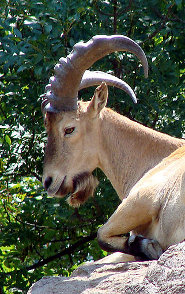
The
West Caucasian tur (
Capra caucasica) is a goat antelope that can be found in the western portion of the Caucasus Mountains, primarily in Russia and Georgia. This large, horned animal has features that are similar to goats, sheep, and antelope. The population of the species is approximately 5000.
The West Caucasian tur has two different coats for cold and warm seasons. The winter coat is a dull, gray-brown, and the summer coat becomes a deeper rusty gray. The undercoating of the animal is yellow, and the legs are dark. The Caucasian tur has distinctive horns which are deeply ridged and shaped like a broad-tipped sword. Males are bigger than females and have larger horns which can grow as long as 70 centimeters (28 inches). Males typically weigh between 65 and 80 kilograms (140 and 176 pounds), while females weigh between 50 and 60 kilograms (110 and 132 pounds). Males are also taller than females and grow to be about 110 centimeters (43 inches). Females grow to approximately 90 centimeters (35 inches).
The range of the West Caucasian tur is found in the Caucasus Mountain region and is no longer than 30 kilometers. The animals inhabit regions that are located between 800 and 4000 meters above sea level. Caucasian turs prefer forest-filled, snowy slopes, and males seek out higher altitudes than females do.
West Caucasian turs are nocturnal, so they travel and forage for food during the late evening, nighttime, and early morning hours. Females travel in herds of ten, but the males often remain solitary. The size of the herd grows in the winter time, and the female group may double in size. A herd can travel up to 20 kilometers a day, but this amount lessens in the cold weather. The diet of the Caucasian tur consists of a large variety of plants and grasses. In the winter, the animals graze on evergreen trees, and they seek out salt licks during all seasons. Caucasian turs breed from November to early January, and females give birth between May and July. The young are born within site of the herd and begin to travel with the group almost immediately.
The West Caucasian tur is considered an endangered species because of the trend in population decline. Numbers have significantly decreased by over 50 percent in the last twenty years. Caucasian turs can live to be fifteen years old, however most die by the age of ten. The main predators of the species are
lynxes and
wolves. Other causes of death include poaching, avalanches, and habitat loss.
Picture of the West Caucasian Tur by Dmano, licensed under
Creative Commons Attribution-Share Alike 3.0 Unported.
You can help spreading the word about this animal by liking it on facebook
Permanent Link
Monday 15 November 2010
Raggiana Bird-of-Paradise

The
Raggiana Bird-of-paradise (Paradisaea raggiana) is a remarkably beautiful
bird that lives primarily in southern and northeastern New Guinea. While there are many different species in the same family as the Raggiana bird of paradise, Paradisaea raggiana is only found in these parts of New Guinea. In New Guinea, this bird is referred to as "kumul," and is the national bird of this country. Images of this bird of paradise are often found on money, stamps and it is also a representative of country's national rugby team. These birds belong to a larger family of birds classified as Paradisaeidae, and the males are well-known for their brightly colored feathers and plumage.
Paradisaea raggiana are typically around 34 cm (13 inches) in length, with some variation. These birds also tend to weigh between seven to twelve ounces, or about 3/4 of a pound or less. Males are very colorful, with wide variation in the colors of feathers, breasts, skin, and tail feathers. Males also tend to have a green area around the chin, with yellow coloring the head and neck. Females, in contrast, have less vibrant plumage and tail feathers. They tend to be mostly brown in color, which helps them avoid predators while raising their young.
Most often, these birds engage in polygamous mating relationships, although some birds do have one primary mate throughout their lives. Males gather in groups and display their colorful feathers in order to attract a female. Females usually lay two eggs at a time, with the incubation period lasting from 18 to 20 days. Nurturing and raising of the young is the responsibility of the mother.
The Paradisaea raggiana typically eat fruits and berries, although they are also known to eat small animals, such as frogs and lizards, as well as leaves. Unlike many birds, these birds of paradise do not migrate throughout the year. Rather, they find their home and stay in that same area throughout the year.
Although these birds have few natural predators, they are facing rapid deforestation in many areas of New Guinea. This destruction of their habitat has left many of these birds of paradise with no place to nest or live. Also, the birds were hunted by Europeans for many years after local peoples had told them that the birds were from the gods. However, today they are not an endangered species. In fact, they are actually quite numerous, and are considered to be of least concern of endangerment.
PIcture of the Raggiana Bird-of-Paradise by markaharper1, licensed under
Creative Commons Attribution-Share Alike 2.0 Generic license.
You can help spreading the word about this animal by liking it on facebook
Permanent Link
Friday 12 November 2010
Northern Royal Albatross - Romeo and Juliet

The
Northern Royal Albatross (Diomedea sanfordi) is a remarkable traveler, covering millions of miles over the Southern Ocean during a life span that can be more than 50 years. Yet the bird remains faithful to one mate for that same long life, and returns to the same nesting site for decades.
The Northern Royal Albatross is one of the largest seabirds, with an average adult being about 1.15 meters, or 3 feet, 9 inches, from beak to tail. They have an astounding wingspan of 3.2 meters, or 10 feet, 6 inches. The birds are white, with black on the top of the wings, and have pale pink bills with a black edge on the upper beak section.
The Northern Royal Albatross lives in the Southern Hemisphere. Its major breeding grounds are in the Chatham Islands, a remote archipelago east of New Zealand. When not raising chicks, they spend up to a year gliding the high air currents over the Southern Ocean, not touching the ground for months on end. The major portion of their diet is squid and fish, which they catch and consume on the wing.
The Royal Northern Albatross is very long lived, with the oldest birds reaching over 60 years old. They pair for life, meeting at the same nesting site for each breeding season. They have a two year breeding cycle; a single egg is laid in mid-November to mid-December, late spring to early summer in the southern hemisphere. The chick is not ready to leave its parents until the following October, and the adults then spend the next year traveling and eating before meeting again.
The Northern Royal Albatross has no natural predators, but
ferrets and cats, introduced into the islands where the birds nest, take eggs and kill chicks. When over the oceans, the birds frequently tangle themselves in fishing equipment while trying to catch fish.
The Northern Royal Albatross is an endangered species. The bird has a very small breeding range, and in the 1980s major storms degraded that habitat, making parts of it unsuitable for use by the birds and the number of chicks raised successfully crashed. Because they breed so slowly, the effects of that crash will last for decades. Recent indications are, however, that the population has stabilized more quickly than expected. Biologists are now cautiously optimistic that this magnificent bird will be a part of the Southern Ocean ecosystem for a long time to come.
Picture of the Northern Royal albatross by XLerate, licensed under
Creative Commons Attribution-Share Alike 3.0 Unported license.
You can help spreading the word about this animal by liking it on facebook
Permanent Link
Thursday 11 November 2010
Walia Ibex - Endangered Mountain Climber

The
Walia ibex (
Capra walie) is a species of wild goat that is found exclusively in the mountains of northern Ethiopia. It is also known as the abyssinian ibex. Nearly all of the remaining endangered population resides along 25 kilometers (15.5 miles) in the Simien Mountains National Park. These mountains are characterized by huge gullies and gorges, where the very agile Walia ibex are able to inhabit even the most slippery, remote rocky cliffs and survive on very sparse vegetation.
It is the striking coloration and magnificent arching horns that distinguish the Walie ibex from other species of ibex. They have a beautiful chocolate-brown to chestnut-brown coat that is greyish-brown around the muzzle and a lighter gray around the eyes and along the legs. Their bellies and inside legs are white and the mature males sport black beards. There are also contrasting black and white marking patterns along the legs. Adults males generally weigh 80-125 kg (180-280 lb) and have very large horns that arch backwards in lengths up to 110 cm (43.3 in). Females also have horns, but are smaller and thinner than males with paler color markings.
Walia ibex actively move and feed only during the early mornings and late evenings. During the middle of the day, they are very lethargic and hide under dense brush to avoid the intense sun and predators. They are herbivores with diets consisting of bushes, lichens, grass, herbs, shrubs and creepers. It is not unusual to see them standing up on their hind legs to reach the tender, new leaves of bushes and shrubs. They live in herds consisting of five to twenty animals, but the older males tend to be more solitary except during mating seasons. Most of the herds consist of females and their offspring. They reach sexual maturity at one year of age. The only known predator for the adults is the
hyena, but the young are also often hunted by a variety of fox and cat species.
Due to rapid population declines, the Walia ibex is classified as a critically endangered species. In 1963, only 150-200 of these animals were surviving. Mainly through the protection they have received after the establishment of the Simien Mountains National Park around 1969, their populations have increased to around 500 individuals. However, habitat loss and poaching still pose major threats to their survival. Important grazing areas have been lost to human settlement, livestock raising and cultivation. Additionally, illegal poaching by local people for the meat, hides and horns of the ibex continues to be an ongoing problem.
Picture of the Walia ibex by
Paulo Philippidis, licensed under
Creative Commons Attribution 2.0 Generic license.
You can help spreading the word about this animal by liking it on facebook
Permanent Link
Wednesday 10 November 2010
White-footed Dunnart
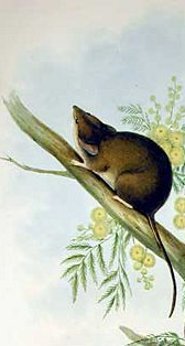
The
White-footed Dunnart (
Sminthopsis leucopus) is perhaps the least known of all the dunnarts. As marsupials, most dunnarts are found all throughout Australia, but the White-footed Dunnart is rarely observed. Easily mistaken for a mouse, this small, carnivorous creature is endemic to most of Tasmania, and the southeastern coast of mainland Australia.
Almost identical to the Common Dunnart, the White-footed Dunnart thrives in woodlands, grasslands, coastal forests, and dune vegetation. Unlike the Common Dunnart, its hind feet are striated, and its deep ear notches, furry brown tail, and long, narrow face distinguish it from a house mouse. Brownish-gray fur covers most of its body, excluding the off-white belly, and its dark, protruding eyes resemble tiny black marbles. Normally larger than females, males average 26 grams (9/10 ounces) in weight, with females averaging 19 grams (2/3 ounces), and maximum body length reaches 11 centimeters (4 1/3 inches); their tails are slightly shorter, reaching 9 centimeters (3 1/2 inches).
White-footed Dunnarts are highly nocturnal, most active in the first few hours after sunset, and will eat a wide variety of invertebrates, mostly insects; they will feed on the occasional small reptile, however, such as skinks. Mostly terrestrial, they inhabit a variety of landscapes, including clay loams, coarse sand, and thick patches of heath; occasional tree-climbing has also been observed. They will often make bark nests inside rotting logs or under wood piles, and some will burrow in the ground.
After mating in the summer, female White-footed Dunnarts give birth in September or October, and up to ten joeys may be delivered. As semelparous creatures, the male will die shortly after the litter is born, and the female will not reproduce again either. At eight weeks old, the young exit their mother's pouch, continue nursing for an additional month, then disperse.
The White-footed Dunnart's total population is equally divided between Tasmania and the mainland, although accurate figures are elusive; the current estimate is less than 10,000 adults. Despite extensive surveys, this animal is rarely observed, and various factors contribute to its population decline. It is presently listed as "vulnerable", with logging, land clearing, and careless burning regimes diminishing its natural cover. This has led to increased predation by foxes, along with domestic cats and dogs. With mostly sparse, scattered populations, their genetic diversity is at risk, and human intervention, possibly through captive breeding, will likely be necessary in promoting the White-footed Dunnart's recovery.
You can help spreading the word about this animal by liking it on facebook
Permanent Link
Tuesday 09 November 2010
Acacia rat - The tree-dwelling rat
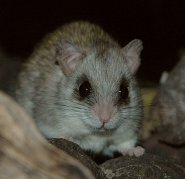
When most people think of rats, they picture hordes of rats running down crowded city streets, running into sewers or a hole in the wall, or scurrying into gutters. But the
Acacia rat (Thallomys paedulcus) is not your average rat. It is a tree-dweling rat that lives in the hollows or forks of Acacia trees. It is a pretty, semi-exotic grey rat with dark fur around its eyes, with a white chin, underside and feet. Their bodies are between 4 and 6 inches or 101.6 and 152.4 mm long, and their tails are between 5 and 8 inches or 127 and 203.2 mm long. The average weight of an adult rat is 1 pound or approximately 453.59 grams.
Acacia rats are found in subtropical or tropical dry shrublands such as Kenya, Ethiopia, Mozambique, Namibia, South Africa, Swaziland, Tanzana, Zambia, Zimbabwe, Botswana, and the Democratic Republic of the Congo. They live mainly on leaves, buds and gum from the bark of Acacia trees, as well as berries, roots and insects. They have many predators, such as snakes,
birds, and wild cats.
Currently, this species is listed as least concern on the IUCN Red List of Threatened, which means that it is widespread and abundant. However, Acacia trees in southern Africa are being harvested in abundance and may eventually cause the Acacia rat’s endangered status to be raised.
The female rat, or doe, generally gives birth to between two and four babies per litter. The life span of the Acacia rat has not been extensively studied. Although they are not often seen in pet stores, they are sometimes kept as pets. Owners report them as living between two and three years.
Acacia rats are said to make intelligent and fun pets. Like other breeds of rats, they are social and should live in pairs or groups. They are avid chewers and must be kept in metal or glass cages as they will chew through wood or plastic. If kept as a pet, Acacia rats need a large cage, both in width and height. They love to climb on branches and ropes, and their antics are great fun to watch, especially late at night when they are most active.
Picture of the Acacia rat by Marcel Burkhard, licensed under the
Creative Commons Attribution-Share Alike 2.0 Germany license.
You can help spreading the word about this animal by liking it on facebook
Permanent Link
Monday 08 November 2010
Bare-tailed Woolly Opossum
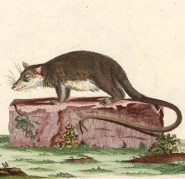
The
Bare-tailed woolly opossum (
Caluromys philander), is a mammal aptly named for its hairless, prehensile tail.
Native to Bolivia, Brazil, French Guiana, Guyana, Suriname, Trinidad and Tobago, and Venezuela, the Bare-tailed woolly opossum is primarily found in arboreal habitats, usually neotropical forests. This nocturnal animal spends its days resting in the canopy of trees, constructing leaf nests in tree hollows, and foraging at night for food.
The Bare-tailed woolly opossum is a New World marsupial, not to be confused with the Australian marsupial, although both are in the same subclass. The woolly opossum weighs in at less than two-thirds of a pound (.29 kg) and averages eight inches (20 cm) in length. Its tail can be twice as long as its body.
When it comes to diet, Bare-tailed woolly opossums will eat any fruit or flower that they can find. These “food opportunists” will select plants based on availability, rather than nutritional value, and will forage through the canopy of trees looking for easy plants to eat. To grasp a hard-to-reach fruit, the woolly opossum sometimes hangs by its long tail. They also eat seeds, insects, and small invertebrates.
Despite a life span of only three years, breeding does not begin until the female is at least one year old. Gestation is short, usually 14 days or less, with young born premature. An average litter size is four to six. Females can have up to three litters per year but this greatly depends on the availability of food. The less food sources, the less litters per year. The young remain in the mother’s pouch for about 80 days before beginning a nursing phase for an additional month. Although the Bare-tailed woolly opossum is a solitary creature, rarely interacting with its own species, the mother foregoes her usual nocturnal activities to nurse her young. Young are then ready leave the nest at about 130 days of age.
Due to a relatively stable population, the Bare-tailed woolly opossum is not considered endangered. However, its population is decreasing.
You can help spreading the word about this animal by liking it on facebook
Permanent Link
Thursday 04 November 2010
Hector's Beaked Whale - Vacuum of the Sea

The
Hector's beaked whale (
Mesoplodon hectori) is less well known than many of its cetacean cousins, and is a relatively unique specimen within the world of whales and dolphins. While the presence of the beak may draw more comparisons to the latter, genetically and functionally speaking it belongs among the ranks of the former. The Hector's beaked whale is incredibly rare, and thus comparatively little is known about it. However, it stands as one of the ocean's most fascinating creatures.
Physical Characteristics
The smallest of the beaked whales, these oceanic mammals generally come in at around 4.2 meters (13.8 ft), and weigh about 1 tonne, or 2,204 lbs, in size closer to a
Bottlenose dolphin than most whale species. Its most prominent physical characteristic is the beak which it shares with other members of its genus.
Distribution
Generally, the Hector's beaked whale prefers a temperate climate. Many have been recorded around New Zealand, but observations have placed them near Tasmania, South Africa, and the southern tip of South America.
Behavior
What separates the beaked whales from other cetacean species is their method of consuming their prey. While larger whales have baleen and eat mostly plankton, and killer whales and dolphins use more traditional hunting methods, the beaked whales hunt by suction. Their primary prey consists of fish and squid hunted in deep water.
Conservation
Unlike many aquatic species, the Hector's beaked whale is presumed to be safe from extinction, at least for the moment. It has not been observed live in the wild since 2007, and has never been hunted for sport or for food. Many beaked whale species display an above-average sensitivity to aquatic sonar, however, and naval exercises have been known to inflict casualties on other species in the genus. Due to its deep water habitat, the Hector's beaked whale is presumed to be safe from such interference. While numbers of the species are probably somewhat low, this is presumed to be natural, and the species is not marked as endangered.
The Mystery
Little is known about the Hector's beaked whale. Until recently, no specimens had ever been properly described; the only ones recorded were in fact Perrin's beaked whales, a similar species. As such, little is known about how this species breeds, how it behaves socially, and what its challenges are within its environment. Its bizarre capacity for suction remains a fascination for scientists, who hope to unlock its mysteries someday.
You can help spreading the word about this animal by liking it on facebook
Permanent Link
Wednesday 03 November 2010
Bengal fox

The
Bengal fox (
Vulpes bengalensis) is the species of fox most often found across the Indian subcontinent and Himalayan foothills, grayer, paler and smaller than its European cousins with the typically elongated muzzle, pointed ears and bushy tale. The Bengal fox typically weighs half of a
European fox's weight, between 2.3 to 4.1 kilograms (five to nine pounds;) from the tip of its now to the tip of its tail, it measures 70 to 90 centimeter (28 to 38 inches.)
Within its extensive range, the Bengal fox's preferred habitat is open grasslands or and scrub forest; it's never found in jungles, tall grasslands or steep hillsides. The Bengal fox's favourite time of day is dawn or twilight; it spends the hottest hours of the day hiding from the sun under thick vegetation or dozing in its multi-chambered tunnel.
The Bengal fox is not a pack animal; it's sparsely distributed across its preferred habitat and populations can fluctuate wildly according to the availability of its prey. They live as male/female dyads but generally prefer to hunt alone. Like most foxes, male and female Bengal foxes mate for life and the male and the female share responsibility for the cubs. Their breeding period lasts from December to January, and the males make loud vocalizations throughout the act.
Often the female will begin digging a new tunnel or excavating an old tunnel before she mates; the tunnel later becomes her cubs' first home. Females bear young once a year after a gestation period of a little over 50 days. Average litter size is two cubs but females can bear up to six cubs.
Bengal foxes are omnivores and opportunistic eaters; their diets mostly consist of rodents, reptiles, crabs, termites, insects, small birds, and fruits.
The average lifespan of the Bengal fox is believed to be between 10 and 12 years in the wild. Its main predators are Asiatic wolves, feral dogs and -- man. As human populations expand and the species' preferred grassland habitat is repurposed for agricultural and industrial ends, the Bengal fox's habitat continues to shrink. While no specific conservation efforts have been targeted to the Bengal Fox, extinction is a possibility if its habitat continues to decline. Hunting of the animal is prohibited by the 1991 Indian Wildlife Protection Act, but the animal is occasionally hunted nonetheless since its teeth and tail are prized as folk medicine.
Picture of the bengal fox by A. T. Vanak, licensed under
GFDL
You can help spreading the word about this animal by liking it on facebook
Permanent Link
Tuesday 02 November 2010
The Snowshoe Hare - Prolific Breeder

The
Snowshoe Hare (
Lepus americanus), an exclusively North American Lagomorph, has three to four litters in the breeding season. She can conceive again while she is already pregnant with young because of two uteri. Gestation periods average 37 days; anywhere between two and seven offspring are born. They live under brush at least one meter tall to keep themselves safe from terrestrial threat. In other areas where birds are prevalent they will seek shelter in three-meter forest understory. Fifteen meters of horizontal foliage is required for cover and warmth. Here, the young are nested in a shallow depression called a form, rather than underground. The leverets are born ready to take care of themselves in this precarious environment. They grow 17 to 25 cm in size and approximately .9 to 2 kg in weight. The underbrush also serves as a place for a "Snowshoe" to groom and to feed its young. Their habitat is generally located in the higher latitudes of the continent but if the lower latitudes such as those in Virginia and the Carolinas have the same environmental conditions at the higher elevations, the hares will live there. Preferring coniferous undergrowth in winter and deciduous in the summer, their diet consists of a variety of greenery, buds, twigs, bark and berries.
The lifespan of the Snowshoe Hare living in the wild is one year. About 15 percent of the population survives five years. Every decade or so the population undergoes a dramatic change in number. Factors such as food, cover, disease and predators dictate their number. In lean times, the hares will roam up to eight kilometers in search of food. They will even eat dead mice and their own feces in an effort to obtain sufficient nutrients. The Snowshoe Hare is by no means a threatened species, despite the vast numbers of animals that prey upon it, such as owls and hawks, red and ground squirrels, coyotes and bobcats, just to name a few. When danger is present they will thump a hind foot to alert others. Their ability to leap three meters in a single hop and change direction mid-air can confuse a fox in hot pursuit. Two distinctive coats that serve as camouflage depending on the season, are due to two sets of hair follicles. Still, they must take care to forage only at dusk, just before daybreak, at night and cloudy days. Venturing out on moonlit nights, however is risky. Lepus Americanus is a marvelous example of Nature's careful monitoring of a species, in that the best compensations for its survival are in-born.
You can help spreading the word about this animal by liking it on facebook
Permanent Link
Monday 01 November 2010
The Golden-Bellied Water Rat -Australia's Resilient Rodent

The
Golden-bellied water rat (
Hydromys chrysogaster) is another one of the many hidden gems within Australia's wildlife; commonly mistaken for the famed platypus due the fact that they inhabit many of the same waterways and bear a resemblance from a distance, golden-bellied water rats are just as unique and intriguing. Native to Australia, New Guinea, and their surrounding islands, the golden-bellied water rat is a crucial part of the ecosystem with roles as both predator and prey.
The golden-bellied water rat is typically found along the shorelines of ponds, rivers, and lakes in burrows where a mother and pups will live or a single water rat will live alone. The mother weans her young quickly and within about 35 days the pups are fully independent. Golden-bellied water rat burrows are often found along coastlines as well, but they usually stay withing range of a fresh water source; the water rat's burrows commonly have multiple chambers and entrances, and seeking cover in the burrow is its only real defense mechanism against predators like birds of prey and snakes.
The golden-bellied water rat is brown to gray in color with a lighter brown or tan underbelly and a very distinctive broad-based tail that is tipped white. They typically grow to be around 24 inches (60cm) long and can weigh 30 ounces (850g) or more. Water rats live on the land but get all of their food from the water; prey items include aquatic insects, crustaceans, mollusks, frogs, toads, and
fish. The golden-bellied water rat has also been known to feed on one of the most toxic amphibians in the world, the ominous cane toad.
The golden-bellied water rat is perfectly suited to its environment with webbed toes on both feet, a long and slender snout, and a strong tail for agility in the water; these animals are said to resemble an otter when swimming and hunting more than a rat. The golden-bellied water rat also has the curious ability to tolerate polluted, clouded, and brackish waterways, giving them an advantage in habitat competition. The water rat is warm-blooded and therefore must contend with potentially dangerous cold spells, and they are also susceptible to hypothermia; another of their adaptations in the form of a layer of special insulating fat helps them combat the winter temperatures when they must still hunt in the frigid water.
The golden-bellied water rat is abundant and thriving and is considered a low risk as far as endangered species watch lists are concerned. Outside of being a great example of animal diversity and a key element in the food chain and ecosystem as a whole, the golden-bellied water rat may also hold potential breakthroughs in medical research due to its tolerance of toxins ingested internally, as with the cane toad, and toxins in the environment like polluted waters.
Picture of the Golden-bellied water rat by Mikeybear, licensed under the
Creative Commons Attribution 3.0 Unported license.
You can help spreading the word about this animal by liking it on facebook
Permanent Link