Friday 27 February 2009
Extinct Animals brought back again?
It could happen sooner than you might think. We already know that Mammoth DNA has been recovered, but that is only half the challenge in bringing back an extinct species of animal. Other considerations have to be a proper carrier (you cannot implant a mammoth egg into a mouse and expect that to work!) along with an undamaged amount of DNA. However, thanks to advances in the processes of decoding DNA it is now possible, even probable, that we could bring back extinct species of many different animals – and help those that are on the very brink of destruction right now. Although cloning would be an issue in gene shallowing, it is possible to mate the clones with wholly unique individuals, or bring back several different individuals and that way avoid the issues of just having a bunch of genetically identical animals.
Although some technological advances still need to be made – we are at the brink of being able to do it within this next decade, and we could see the rise of the mammoth from the ashes of our distant past in which we hunted them to annihilation. One of the more controversial mammals that could be brought back is one that we are related to – and helped to cause the extinction of by filling their ecological niche, and they would pose a very hard ethical question too.
Homo neanderthalis or Neanderthals as we call them. Neanderthals were and are not an ancestor of ours, but a closely related offshoot of an originator before us and them. If we were to bring back Man’s closest relative, what kind of ethical nightmare would that make? It might be somewhat of a major issue bringing back a human cousin that is not of the same species as us. They have been extinct for nearly 25,000 years.
Another animal that could be brought back is a more recent victim of extinction, but also a very powerful predator in its day, the
Short-face bear. This monstrosity is a third larger than the
Polar Bear, and would weigh more than a tone. It is feasible as there are existing frozen specimens. Another fearsome creature that science could unleash is the Sabre-toothed tiger, a large carnivore that killed by going right for the jugular if recent science and research is correct. Another large creature, but not a carnivore, would be the
Glyptodon – a nearly tank sized armadillo (well, tank sized for the small armadillo anyways). Other ancients that could be brought back include the
Irish Elk, and the
Giant Ground Sloth, which would both serve as something of a less controversial emergence.
Some more recent passings which were wrought by man are the
Tasmanian Tigers. Extinct in 1936 by the will of man alone, they could be brought back and fill an ecological niche voided when the last one died in a zoo. Another possibility is the old
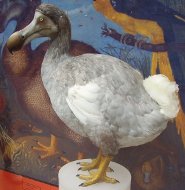
Dodo, of which a good specimen exists. The Dodo was hunted exclusively by man when found, and the accounts of the deaths of the last known are recorded for all of posterity from the year 1690. There is also the possibility of bringing back yet another avian – the moa. The
moa was a large flightless bird that lived in New Zealand, and several eggs are well preserved in the mountain caves of New Zealand.
Picture of the dodo by
Ballista, licensed under
GFDL
You can help spreading the word about this animal by stumbling it by pressing
this link
- Permanent Link
Monday 23 February 2009
Honduran white bat

The
Honduran White Bat (
Ectophylla alba) is a bat that has – like its name suggests – snow white to grayish fur, along with an amber or yellow nose and ears. They are a near-threatened species of bat and are up for re-evaluation in the near future under the new standards of the IUCN. This bat, along with the
"ghost bat" is one of the only two currently known species of bat that is white. Most others are a variant of brown, tan, or might have white markings in the case of the recently discovered Stripe-Faced Fruit Bat. The bats are rather small in size, measuring at just 1-2 inches (3-5 cm) in length and the weight is less than an ounce at .2 (6 grams). It lives in Central America in dense thickets of the rainforests or abandoned banana fields (called groves). They are also known to roost inside abandoned buildings and hollow trees on occasion. They feed mostly on fruit, and they give birth in the spring to just one offspring.
The Honduran White Bat is unique among most bats (but not many tropical bats) in that it will modify its immediate surroundings for its own benefit. Unlike the misconception that all bats live in caves, this bat will use the leave of the large heliconia plant to form a tent. It does so by cutting the side veins of the plant that extend out from the midrib; this causes the leaf to droop along the stem, making a tent. The little white bats then cling to the inner plant upside-down in small colonies of around six, although larger groupings have been reported. Unlike most bats that do make tents – the Honduran White Bat will not flee if disturbed lightly by looking under the leaf – they will only flee when the stem itself is disturbed causing a brief flurry of activity. The advantage of having their white fur is postulated to be the reason – as when sunlight filters through the leaf they look green, and so by not moving they will go un-noticed by possible predators from below.
The Binomial Name of the Honduran White Bat is Ectophylla alba. Its genus is Ectophylla of which it may be the only member. Ectophylla belongs to the Subfamily Stenodermatinae of which many other bats are a part, such as the Red Fruit Bat, the Neotropical Fruit Bat, and many more (please note that these fruit bats are not in the same family as the Flying Foxes which are the large fruit bats that belong to the Suborder Megachiroptera). Stenodermatinae belongs to the family Phyllostomidae, which are also known as the leaf-nosed bats; well known members include all sorts of insectivores, frugivores, full-fledged vertebra eating predators, and the three species of bat which feed solely on the blood of other animals. Phyllostomidae belongs to the Superfamily Noctilionoidea, which contains the Fisherman Bats, Ghost-Faced bats, and short-tailed bats. Noctilionoidea belongs to the Suborder Microchiroptera, otherwise known as the microbats. Microchiroptera use echolocation to find their way about in the dark, they lack under-fur, and they feed primarily on insects – with the exceptions of the various families that feed on fruit, other animals, or blood. Microchiroptera belongs to the Order Chiroptera of which the Megabats are members (megabats lack echolocation with the exception of one single species, and feed primarily on fruit, they are also the largest bats alive). Chiroptera belongs to the Superorder Laurasiatheria of which we
Homo sapiens sapiens are members, along with all the ungulates, carnivores, anteaters, and whales (and more). Laurasiatheria belongs to the Infraclass Eutheria, of which all placental mammals are members. Eutheria belongs to the Subclass Theria, of which the marsupials are members – but the
monotremes are not, and this all belongs to the Class Mammalia.
Interesting Fact
The Honduran White Bat is known for its white fur, unique among bats as it is only one of two species to have this coloration.
Picture of the Honduran white bat by
Leyo, licensed under
GFDL
You can help spreading the word about this animal by stumbling it by pressing
this link
- Permanent Link
Wednesday 18 February 2009
Humpback whale
Humpback whales (
Megaptera novaeangliae) are a once-endangered species of whale that was salvaged from the very brink of annihilation due to a moratorium on whaling in 1966. Before this their numbers had dwindled to an alarmingly low number – however today there are nearly 90,000 of them; although not as many as there once were, it is enough to insure the recovery and survival of these massive mammals. An adult Humpback Whale is usually between 45-50 feet in length (13-16 meters) and can weigh up to nearly 80,000 lbs – usually around 79-80 (36,000 kilograms). They have very large pectoral fins along with a narrow head, and are baleen whales (their teeth are like massive combs). Males of the species sing – or communicate – through sound transmitted across vast distances; these songs will usually last up to twenty minutes and it might have a role in mating.
Humpback whales travel thousands of miles every year in their migrations, and are found in all oceans on the planet. They feed during the warm summer up or down toward the poles, then they travel to the tropical waters in winter to give birth to their young. When they’re in the tropical waters they live off of their vast fat stores for energy, and migrate back to the polar waters to replenish the supply through feeding. Because Humpback Whales are baleen whales, their diet is of the smallest creatures in the oceans of the world – krill and small fish. Krill are shrimp-like arthropods that are very small, but their numbers are very large. They are the mainstay of the oceans, and if their weight was added up from just the Antarctic Krill it would outweigh all the humans on earth – twice. During blooms they can even be seen from space.
The Binomial Name for the Humpback Whale is Megaptera novaeagliae, as it belongs to the Megaptera genus, of which it is the only living member. Megaptera in turn belongs to the Family Balaenopteridae, which are all of the rorquals whales, of which there are two genera and nine species – eight of which are in the Balaenoptera genus which has all other rorqual baleen whales such as the
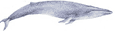
Blue Whale,
Fin Whale,
Sei Whale and more. Balaenopteridae belongs to the Suborder Mysticeti of which all baleen whales belong to – living and extinct, and includes the
Bowhead Whale, Southern and
Northern Right Whales,
Gray Whale, and
Pygmy Right Whale. Mysticeti belongs to the Order Cetacea of which all whales, dolphins, and porpoises belong. A suggested Infraorder is Whippomorpha which would class the Hippopotamus with Cetacea and thus bring them into the fold. However, the next currently recognized step from Cetacea is the Superorder Laurasiatheria, of which bats, moles, hedgehogs, even and odd toed ungulates, anteaters, and carnivores are members. Laurasiatheria belongs to the Infraclass Eutheria of which all the Placentals are a member, and this belongs to the Subclass Theria of which all mammals that give birth to live young belong, and this belongs to the Class of Mammalia, which includes all the mammals.
Facts about the Humpback
- Humpback Whales are thought to live up to 60 years – however new evidence suggest that they may live to be well over 200 years old.
- Humpback whales are very athletic for their size, they will breach into the air – lifting most of their body weight out of the water and then splashing back down in a display of power for a possible mate. Additionally they spy-hop (where their heads come out of the water and they ‘spy’), lobtail (where their flukes come out of the water and then slap down hard), and slapping their flippers.
Picture of the humpback whale by
Wwelles14, licensed under
GFDL
You can help spreading the word about this animal by stumbling it by pressing
this link
- Permanent Link
Friday 13 February 2009
Homo neanderthalensis - extinct from competition
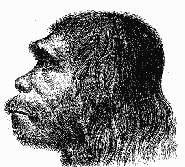
Recent study shows that Homo neanderthalensis went extinct from competition.
Until recently it had been thought that Neanderthals went extinct due to climate change, scarcity of food sources, and other environmental changes – although it has long been postulated that Cro-Magnon man outcompeted his cousin Neanderthals. In the study location, time, and conditions of those times were looked at carefully using radiocarbon dating along with high-quality simulations. Using special algorithms along with advanced predictive models it was shown that Neanderthals should have had no real reason to continue their decline unless another source was causing it.
Neanderthals are not a direct ancestor to modern man, but instead are an offshoot of a common ancestor. Nearly identical in most respects, their cranial capacity was only slightly less than our own, however their strong build and oft-found healed fractures indicate a much rougher and harder life than that of Cro-Magnon man. What the modern Homo sapiens lacked in muscle was made up for in more efficient means of hunting and use of tools. Additional plausible explanations include the more complex roles in early societies and understandings of broader visions and planning – however it is unknown whether this occurred then, or later, and whether it was the result of a different social structure. Cro-Magnons are in essence modern man; however they are distinct enough to be considered early modern man. The genes from mitochondrial DNA matches those of the inhabitants of Europe today along with Africa, while mutations are found in populations further out.
The Study showed that the last populations of Neanderthals to die out lived in Spain, at the southern end, as they avoided contact and competition with Cro-Magnon man. However once contact was made, they too died out. It is unknown exactly how they were eliminated from the line, but it is seen that modern humans were taking away the niches that Neanderthals had held for thousands of years, and with nowhere to go they simply died out through starvation. However combat has never been directly ruled out by any study, and it is possible and likely that combat would have occurred over restricted resources.
To read more about the findings of the study, follow
this link
You can help spreading the word about this animal by stumbling it by pressing
this link
- Permanent Link
Monday 09 February 2009
Critically Endangered Javan Rhinos Found
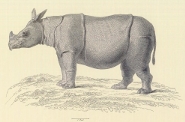
Four to be exact – four of the rarest rhinos, the Javan Rhinos, were found in the dense jungles of Indonesia. The four young rhinos are some of the rarest creatures on the planet. Initially some of the most widespread, one of the three subspecies was extinct by 1900 due to direct human hunting and slaughter – the other are on the very brink of total annihilation. The other species called the Vietnamese Rhino, has just twelve known living specimens and is even rarer than the Javan rhino which has only 40 living.
The Javan rhino was thought to be extinct several times, as many sources list it as such. It is such a rare animal that the surprising find has shocked many in the conservation efforts as all four found were young. This gives hope to the possibility of recovery of the rhino, as the four ran back into the jungle upon being spotted and were seen leaving with two older rhinos.
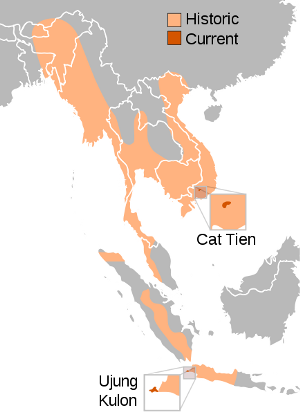
The hope, since these were all found in the wild, is that the rhino can make a recovery with the help of conservation efforts. Unfortunately no zoo has a Javan Rhino, and humans continue to attempt to poach them for their black-market value, and they are under constant threat of death from this. Additionally as the population of humanity booms in the region, their habitat is being stripped at an alarming rate. Indifference by local officials in some areas and by the population could doom the species. This is a case where human beings are directly in control of the fate of this critically endangered species, and it falls to us to either kill them all, or let them live and repopulate.
You can help spreading the word about this animal by stumbling it by pressing
this link
- Permanent Link
Saturday 07 February 2009
Arctic hare - Snow-white through the winter

The
Arctic Hare (
Lepus arcticus) was once considered a subspecies of the Mountain Hare; however it is now known to be its own species of hare. The Arctic Hare is highly adapted to colder climates and thrives in the polar and mountainous regions of the northern hemisphere with smaller ears and very dense fur. Its distribution is wide as it lives in the cold and icy tundra of Canada, Greenland, and Alaska, and there are four subspecies known. Those that live in the farthest northern reaches are white all year long – while those that live in more temperate locations will change color from white to a grayish blue in summer while maintaining the snow-white tail. They can grow to a size of around 28 inches (70cm) in length, and can weigh as much as 12 lbs (5.5kg). Their diet consists of woody plant material, along with berries, buds, leaves, and greases. It can find these even under the snow using its well developed sense of smell and its digging prowess.
The Arctic Hare does not hibernate, but will dig a shelter in the snow and huddle with other hares for warmth. If they are threatened by predators they can accelerate in an instant to very high speeds – up past 40 miles per hour (60 km/h) to escape. Their white coat makes them nearly invisible in the snow, and they sometimes will gather in groups of thousands. However in mating season they will disperse and scatter, rather than be close to one another and it is during this time that the male will define territories and will pair off – although a few males might take more than one mate. The females will birth once a year, and in the litter there can be as few as two or as many as eight, and they will be fully grown in months. The rate of rapid maturity and reproduction insures that the species will always be very populous.
The Binomial Name for the Arctic Hare is Lepus arcticus, and it has four subspecies: Lepus arcticus monstrabilis, Lepus arcticus groenlandicus, Lepus arcticus bangsii, and the base species Lepus arcticus arcticus (much like
Homo sapiens sapiens). Lepus contains all of the hares and jackrabbits – but most certainly not the rabbits. Hares are generally larger and stronger – and have never been domesticated. Lepus belongs to the Family Leporidae, which does contain the rabbits, and also the
pygmy rabbits and many other rabbits which belong to their own genus. Leporidae belongs to the Order Lagomorpha of which there is one other family – the Ochotonidae which contains the
Pikas and the extinct Giant Rabbit (Minorcan Giant Lagomorph) which weighed in excess of 50 lbs (23 kg). Lagomorpha belongs to the Superorder Euarchontoglires – however they belong to the Glires, a subset of the Euarchontoglires which also contains the subset Euarchonta (of which we are members). Euarchontoglires belong to the Infraclass Eutheria, the Subclass Theria, and the Class Mammalia.
Fact
The Arctic Hare was an important resource to Native Americans in that they can provide food and clothing with their thick fur. As the species is extremely plentiful it was a lifesaver in many winters when food was scarce, and warmth in high demand.
You can help spreading the word about this animal by stumbling it by pressing
this link
- Permanent Link
Tuesday 03 February 2009
Short-tailed chinchilla

The
short-tailed chinchilla (
Chinchilla brevicaudata) (which is also called various other names such as the Bolivian Chinchilla, the Peruvian Chinchilla or the Royal Chinchilla) is a species of
rodent that can be found in the Andes Mountains in South America. The short tailed chinchilla’s range includes Bolivia, Chile, and Peru, and has a very soft fur that was once very desirable in the fur trade industries. The Short-tailed Chinchilla is usually 6-14 inches (16-38cm) in length, having a tiny tail that takes up almost none of that length (and from which it gets its name) along with a weight of about 18-35 ounces (half a kilogram to a full kilogram). The Short-tailed Chinchilla likes to burrow down below shelter rocks, as in they prefer to burrow under the rocks to maintain a good and strong shelter and also typically inhabit particularly colder areas due to their excellent dense fur. Because of this fur, they prefer the mountains, far from predators that would get them if they lived in the warmer areas. In addition to being mountain dwellers, they are also very social and live in colonies. The females will usually have a litter of one to two young at a time, and their main food sources are the grasses and shrubs found around their burrows on the sides of the mountains.
The Short Tailed Chinchilla’s binomial name is Chinchilla brevicaudata, indicating that its species is brevicaudata, and its genus is Chinchilla. The Genus Chinchilla has one other species, the Long Tailed Chinchilla. Chinchilla belongs to the Family Chinchillidae, of which there are two subfamilies. The Subfamily Chinchillinae contains the Chinchillas and also the Lagidiums (mountain viscachas) – the other subfamily Lagostominae contains the Lagostomus (plains viscachas) along with two other extinct genus. The family Chinchillidae belongs to the Superfamily Chinchilloidea which has one other family that houses the Chinchilla Rats, Chinchilloidea belongs to the Parvorder Cavimorpha. Cavimorphia has within it the pacarana, the porcupines, the pacas, spiny rats, and many others, and it belongs to the Infraorder Hystricognathi. Hystricognathi are all the rodents with a specialized jaw and include the tuco-tucos, the agoutis, the acouchis, and many more – and this belongs to the suborder Hystricomorpha, which has the additional Infraorder of Ctenodactylomorphi – or more commonly known as Gundis. This Infraorder belongs to the Order Rodentia – which is the largest order of mammals on earth, containing 2,280 species. In turn this Order belongs to an intermediate unranked order called Glires, which also contains the Lagomorphs (rabbits and their relatives) and the Glires belong to the Superorder Euarchontoglires of which Primates (you and I) are a member, as well as many others and can be traced back to a hypothetical common ancestor that was alive 95 million years ago. This Superorder belongs to the Infraclass Eutheria (placental mammals and extinct close relatives) which belongs to Theria (Placental + Marsupials) and that belongs to the Class Mammal.
For years now they have been bred in captivity. Hunting of the Short-tailed Chinchilla for its fur was common before the 1800s; however by 1829 it had increased to 500,000 animals every year until it became so scarce there was no longer any way of making money from it except by smaller operations and poaching. The first efforts to curtail and save the Chinchilla began in the 1890s, and the first viable laws were passed by 1929, however enforcement was marginal at best, and non-existent at worse. By the 1950’s there were no more verified sightings of the Short-tailed Chinchilla in the wild, and it would not be until the 80s that real enforcement began - decades late. Because there is domestic bred stock, it is possible to reintroduce the species, however their fur remains in high demand and their usage as pets is also in demand. To truly bring them back would require an effort and management to prevent hunting and poaching again, along with proper environment monitoring.
WARNING: The Short-tailed Chinchilla is listed as Critically Endangered by the IUCN, and its population is in continued peril in the wild. In earlier times, before mass hunting, the Short-tailed Chinchilla could be found in Chile, Argentina, Peru, and Bolivia in the Andes mountain range, and had populations numbering in the vast millions. However they are now universally extinct from all of these areas with the exception of extant populations possibly living in the border areas between Chile and Bolivia.
The IUCN however, also gives hope that they could be reintroduced from domestic stock used in the fur industry, but a concerted effort to save the Chinchilla in the wild has yet to occur. It is through direct human action of hunting that these creatures are critically endangered and possibly even heading toward extinction in the wild (the end stage before total extinction should all populations in captivity die out).
Picture of the short-tailed chinchilla by Jaime E.Jiménez
You can help spreading the word about this animal by stumbling it by pressing
this link
- Permanent Link