Thursday 11 December 2008 Whales and other sea life in danger from noise
 It is a given that high powered sonar may have an effect on whales and other cetaceans and sea life that use echolocation. However that is not all that they must contend with. In addition to sonar, they also have to sift through various motors, drillings, and other sources of sound that can muddle their ability to echolocate. Sonar, by far though, is the most dangerous to whales and cetaceans. In November of 2007 a U.S. appeals court reaffirmed and re-instated a ban on sonar testing off the coast of Southern California, however by January United States President George W. Bush exempted the U.S. Navy and allowed for testing, calling it 'paramount' that the testing continue.
 Throughout the 90's several studies and research of the effects of sonar on whales found that there might be links, such as the 96 stranding of twelve Cuvier's Beaked whales during a NATO low and mid range sonar test, along with an incident in 2000 in the Bahamas in which the Navy transmitted a sonar test in the 8kHz range at 235 decibels – which resulted in 17 whales beaching and seven of those dead by the time they were found. It was later found that these whales suffered hemorrhaging caused by the acoustics that resulted in damage and bleeding to their eyes, and their ears. With this sort of damage they likely stranded themselves on the beach, as beaching is in itself a survival tactic – in order to maintain breathing and prevent drowning they risk death by beaching to maintain life just that little bit longer.
When the President of the United States exempted the Navy in January of 2008 a Federal Judge ruled that the Navy was in fact not exempt from wildlife protection laws, and established a no-sonar zone around the area in Southern California. A few days later after this ruling a three judge panel upheld this and it was enforced until the United States Supreme Court decided on the 12th of November in favor of overruling the previous judgment five to four, and allowing for the blasting of Sonar again to "Allow the United States Navy to Protect the United States of America".
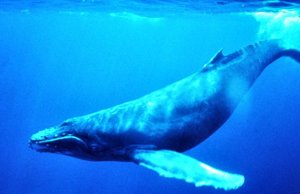 It is likely, now that the United States Navy can – with impunity – use Sonar, that more strandings off the coast of California are possible, as this is the migratory period for whales – especially the California Gray Whale which is by mid December off the coast of San Diego, and working its way south to Baja where they give birth to calves. Other whales in danger are the elusive Blue Whales which roam the entire ocean and can be anywhere at any time, and have been spotted in the waters off Southern California during the winter months, Humpback whales during the summer, and many other cetaceans that make the journey every year off the coast of California to and from the Arctic to the Antarctic. The dangers to the whales are immense, with the possibility of permanent damage to their ears, eyes, and possibly brain.
 It is in my opinion that use of Sonar is applicable in a time of war or a time when the threat is from the seas. However in today's ever paranoid world it is unlikely that active sonar (where a signal is sent out, and then received) will prevent an airliner jacking. Is it just me, or does it seems like the U.S. is going out of its way to harm the whales? What use could active sonar really be, considering that unless we're planning for a war on Russia, no other nation has truly silent submersibles, and almost every ship can be heard with passive sonar (listening – no pinging). Besides, the ping is only used when a situation arises that deems it worthy. What would be the gain of blasting marine life with high volume energy in the form of underwater sound anyways?
To me it seems ridiculous that we would need to do this research off the coast of California. Would it not be better to do it in the middle of the Pacific where migrations are not occurring in the first place with NATO and UN approval? Consider that a warning ping sent at a volume level low enough that it won't cause brain damage would likely scatter any marine life in the area – making it safe for the testing of their high powered sonar would save the lives of whales. In fact, if we learned from the whales we might build better sonar systems that mimic them – rather than kill them. The Blue Whale can map the ocean as it travels with its abilities of echo location… would it not be a fruitful venture to mimic the blue whale, thereby making a system that is non lethal and won't confuse them – or cause their heads to bleed out? You can help spreading the word about this animal by liking it on facebook