Wednesday 18 November 2009
American Badger - Nature's Digging Machine

The American Badger (
Taxidea taxus), is mainly found in North America's Great Plains area. They also occur in Canada's central western parts, all over the Western United States, and in the mountainous regions of Mexico. Their range in the last century has been extended to Far East of Canada and Ontario. American badgers prefer to stay in open grasslands, pastures, and dry fields.
A mature badger weighs up to 8.8 - 26.4 lbs (4-12 kg). Their total length from head to tail is about 20.5 - 34.5 inches (52 -88 cm). They have short legs and a flattened head. The color of the coat is grayish or reddish with a buffy colored ventrum. There are black patches on their face and the chin and the throat are whitish. Males are considerably larger than their counterparts and the badgers found in the north are larger than those found in the south.
American badgers breed only once a year. The main season for breeding is early autumn or late summer. There are 1-5 babies in each litter. The gestation period lasts for 6 weeks. The babies are weaned out in about 2-3 months. They become independent when they are 5-6 months old. At the time of birth, the baby weighs around 3.92 oz (93 gram). The female reaches her reproductive maturity at the age of 12 months and sometimes, even at 4 months. The male badgers gain their sexual maturity when they are 16 months old.
American badgers are born blind and have thin fur on the skin. They open their eyes when they are 4-6 weeks old and the mother nurses them till they are 2-3 months old. The offspring come out of their den early (within 5-6 weeks) and disperse when they reach 5-6 months. Life expectancy of American badgers is about 14 years in the wild and in captivity they can survive up to 26 years.
Badgers are mainly solitary animals. There are generally only five to six badgers per square km. They are most active at night, but during winters, they are not that active. Although, not truly hibernators, much of their time in winters passes in torpor. In winters, they come out from their dens only on warm days.
One can call American Badgers brilliant digging machines. Their forelimbs are quite powerful to help them dig the soil rapidly. They construct burrows in search of their prey but apart from this, these burrows also serve the purpose of sleeping. They dig up to three meters in the soil.
Badgers are mainly carnivorous animals. They have an extremely big range as far as food is concerned. They prey on ground squirrels, pocket gophers, marmots, moles, voles, deer mice, lizards,
wood rats, fish, nesting birds, amphibians, insects etc. They do not prey on open grounds and most of their food requirement comes from digging.
Golden eagles,
humans,
Coyotes,
bobcats, and
cougars are their main predators. By hunting, trapping, poisoning, and automobile fatalities, the primary predators, humans have become responsible for the destruction of their habitat.
Picture of the American badger by
Jonathunder, licensed under
Creative Commons Attribution ShareAlike 3.0
You can help spreading the word about this animal by stumbling it by pressing
this link
- Permanent Link
Tuesday 17 November 2009
Rock Squirrels - Hibernation as Their Favorite Activity

The Rock squirrel (
Supermophilus Variegatus) is the largest in size among all squirrels with long ears and a long tail. It is 43 to 52.5 cm (17 - 21 inches) in length and appears grayish or brown in color. It displays three colors; the head is grayish brown, shoulders are grayish, and rump is generally reddish brown, brownish, or blackish. Tail also bears the same color as the back right from top to bottom. Its braincase is not inflated but relatively flat. Its interordital region is relatively wide, upper incisors are stout, and the length of the maxillary tooth row is more than 11 mm.
The rock squirrel looks like the
Arizona gray squirrel and to differentiate both squirrels is quite difficult. Its large size, long bushy tail, and gray color resembles only the tree squirrels which are found in New Mexico. Rock squirrels are generally found in rocks, canyon wall, rock piles, and hill slopes. Their habitat range is quite wide. They are found in marshy grounds, marshy grass, inside some hayshed, and under log cabins or fences in Arizona. They occur at 1600 ft elevation at Yuma Co., Vicksburg, San Francisco Mountains, and Coconino Co. in Arizona.
Unlike tree squirrels, rock squirrels dwell in grounds. They make burrows in the ground and nests in the rocks but this, in turn, makes it very difficult for them to dig tunnels in the rocks. They can move up and down on the rocks with great speed. In search of food, they climb trees or roam in bushes. They can even climb to the slenderest branch in search of new buds or ripened fruits.
These squirrels mainly feed on seeds and buds of mesquite, opuntia fruit, blooms of agave, ephedra seeds, juniper berries, ribes cereum fruits, gray thorn berries, bulbs of lilies, squawbush, apricots, lupine and peaches, acorns, walnuts, grapes, cultivated wheat and corn, and hackberry. They have harassed the Supai inhabitants so much that the tribal people have chained dogs under the trees to protect their fruits. Sometimes, rock squirrels have been found eating flesh of animals as well.
There is not much known about the breeding habits of this species. It is believed that rock squirrels in the Arizona region give birth to young ones in March while those living in the cold regions may give birth in mid-May. There can be 5 to 6 babies in one litter and there can be two litters per year. The female usually nurses the babies but it is difficult for squirrels found in northern Arizona to raise two litters at a time due to a shorter season in this area.
Rock squirrels are most active in early morning and evening. In north, they hibernate in winter while in southern parts of Arizona they are active throughout the year. According to reports, these squirrels are less seen in winters and come out in abundance when the sun is shining and days are warm. In winters, they come out only to get some sunlight otherwise they are in a state of torpor but at the same time, it cannot be said that they are in hibernation.
Picture of the rock squirrrel by
Tadam, licensed under
GFDL
You can help spreading the word about this animal by stumbling it by pressing
this link
- Permanent Link
Monday 09 November 2009
White-tailed Jackrabbit - Jackrabbit with the largest range

The White-tailed Jackrabbit (
Lepus townsendii), Prairie Hare is a native of the western parts of North America. Although briefly reputed as an extinct species, according to some observations it is still found in the Yellowstone National Park.
Unlike other rabbits, the white-tailed jackrabbit is quite large in size with extra large ears. The color of its fur varies according to the season and the habitat. It becomes grayish brown or yellowish brown during summer and gray or white underneath. Its face and throat are darker. In southern regions, the back of these rabbits remains buff-grey while their sides turn white in winters. Since there is snow all over the northern regions, their coat also turns white. Their face, feet, back, and ears look light buff in color. Their tail remains white throughout the year and the ears are white at the edges.
The female is larger than the male. The total length of the body of a mature white-tailed jackrabbit is about 22 to 25.6 inches (56 to 65 cm) and its weight is 6.6 to 8.8 pounds (3 to 4 kg).
The white-tailed jackrabbit is most commonly found in grasslands, green pastures, and forests at high altitudes. It feeds on herbaceous plants and grasses. In winters, the food is scarce and so, they depend on barks and plants that come out of the snow.
The female white-tailed jackrabbit produces 1 or 4 litters per year. Sometimes, more than ten leverets are born per litter with an average of five. The gestation period lasts for 5 to 6 weeks. The babies are fully furred at birth with their eyes open. The mother nurses the babies for about one month and then, they are weaned out.
White-tailed jackrabbits are very active all the year round and like to roost solitarily. They are very active in the morning, at late afternoon, and at evening when it is cool. The rest of the day, they rest in the shallow depressions at the base of bushes or in hollow spaces in snow. Males have occasional fierce battles but injuries are not seen on their bodies. Among other jackrabbits, the white-tailed jackrabbits occupy the greatest range. The home range of these rabbits extends up to 2 to 3 km in diameter. Their population fluctuates according to the availability of food. In the Northwest regions, their population has been reduced considerably due to the development of agriculture and overgrazing. The white-tailed jackrabbits have many predators like all lagomorphs.
These rabbits are found over a very wide range. Along to the west of Central Canada, they are found in south-central California. They also seem to exist in the United States in the southwest region of Ontario, south of Wisconsin, east of Alberta, and the Great Plains of Saskatchewan.
Picture of the White-tailed Jackrabbit by Adam Lowe, licensed under
Creative Commons Attribution ShareAlike
You can help spreading the word about this animal by stumbling it by pressing
this link
- Permanent Link
Thursday 05 November 2009
Narwhal - The Whale with the Long Tusk

The
Narwhal (
Monodon monoceros) is a medium-sized whale that is found in the Arctic Ocean the year-round. It is one of the two whales of the Monodontidae whale family, the other being the
Beluga. The male members of this species can be distinguished by a specific characteristic feature. They have a long and straight helical tusk which extends from their upper-left jaw. Mainly found in the Greenlandic and the Canadian Arctic Ocean, the Narwhal is exclusively known as an Arctic predator. Narwhal whales are being harvested since centuries by the Northern Canadian people to get ivory and meat and are continuously being hunted till date.
The weight of Narwhal males is ranging up to 3,500 lbs (1,600 kg) and the female Narwhals weigh 2,200 lbs (1,000 kg). Narwhals are pigmented with a white and black pattern. At birth, their color is dark but it becomes lighter with age.
The males are 13 to 16 ft (4 to 5 m) long with a tusk which is 9.8 ft (3m) long and they weigh about 22 lbs (10 kg). One out of 500 males has two tusks! These tusks normally occur when the small right incisor grows out. Female Narwhal produces a tusk but this happens very occasionally.
Narwhals have a rather specialized but restricted diet. Greenland halibut, Gonatus squid, shrimp, and Arctic and polar cods is on the menu. Additional things such as wolfish, skate eggs, and capelin are also found from their stomach.
Narwhals have shown seasonal migrations especially to ice-free grounds during summers, generally in shallow seas. In winters, they are primarily found in off shore areas, in deep waters below the thick layers of ice.
The most notable adaptation of Narwhals is their ability to dive deep. They can dive as deep as 2,400 ft (800m) below the sea which is the deepest dive ever recorded among marine mammals. Narwhals are gregarious animals and roost in groups. There can be five or more individuals in one group. In summers, several groups gather and form larger aggregations. Sometimes, males rub their tusks with another male's tusks showing dominance hierarchies.
The Narwhal whales are found in Atlantic and Arctic Oceans in areas near Russia, Greenland, Baffin Bay, Hudson Strait, and Hudson Bay. The total population of this species is estimated at approximately 75,000 individuals. Western Greenland and northern Canada are the areas where this species is found in abundance.
Besides man, orcas and polar bears are the main predators of Narwhals. Almost all parts of this species including its skin, meat, organs, and blubber are consumed. Blubber and raw skin of Narwhal whales called the 'Mattak' are considered delicacies, and tools and other art works are made using their bones. Keeping the Narwhals in captivity has been proved futile. The Narwhals, which were brought in captivity, could not survive for more than just a few months.
You can help spreading the word about this animal by stumbling it by pressing
this link
- Permanent Link
Tuesday 03 November 2009
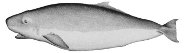
The Pygmy Sperm Whale

The
Pygmy Sperm Whale (
Kogia Breviceps) belongs to the sperm whale family and since this creature is not often seen in the sea, there is very little information about its whereabouts.
Just like the giant sperm whale, there is a spermaceti organ in the forehead of the pygmy sperm whale and there is a dark red colored fluid in the sac in its intestines which gets released whenever it is frightened. It is considered that this fluid is expelled to disorient and confuse predators.
The length of a pygmy whale is about 47.24 inches (1.2 meters) at birth and after attaining full growth, they may reach a length of 137.79 inches (3.5 meters). The weight of an adult pygmy whale is about 881.83 pounds (400 kg). The back and the sides of the whale are bluish gray while its underside is creamy in color. Compared to its body, its head is much larger and if looked at from sideways, it appears swollen. The dorsal fin of this whale is considerably smaller than that of its cousin Dwarf Sperm Whale, the smallest whale, and this difference between the two species can be used for identification of the species. The lower jaw is small and hangs downwards. It has 20 to 32 teeth and all of them are set in the lower jaw and it has a false gill behind its each eye. The Pygmy Sperm Whale is usually a solitary creature but sometimes, one may find also it in a group of five to six at a time. It feeds on crabs, small fish, or squid.
Much is not known about these whales, but there is some evidence indicating that they produce only once in a year. The gestation period is for about 11 months and a female gives birth during spring or autumn and at birth, a calf may weigh about 121.25 pounds (55 kg).
The Pygmy sperm whale can be found in all tropical, subtropical, and temperate waters, i.e. in Atlantic, Indian, and Pacific Oceans. This species is known for migration and though its population is not known, it is not considered threatened.
Since these whales are seen rarely, most data regarding them comes from the stranded animals making their range and the migration map very difficult. This is the reason why these whales are not hunted on a large scale. A matter of concern regarding this species arises from that fact that although it is not considered an endangered species, plastic bags have been found in the stomach of some pygmy sperm whales.
You can help spreading the word about this animal by stumbling it by pressing
this link
- Permanent Link
Monday 02 November 2009
Blue Buck - Extinct Mammal from Africa

The
Blue buck (
Hippotragus leucophaeus) or Blue Antelope, sometimes called the Blaubok is now extinct. It is the first "recent" African mammal which has disappeared from the pages of history. It was a relative of the Sable Antelope and Roan Antelope but was smaller than both species. It was a native of the Savannah on the southwestern coastal areas of South Africa. It is thought that during the ice age, it was spread over a quite big range. The bluebuck would prefer only high quality grasses being a selective feeder.
During the 17th century, it was seen in Europe, but up to that time it had already become uncommon. With more and more land being used for agriculture, its habitat area started disappearing and it became an easy prey for the Europeans, although its flesh did not taste good. Up to the 18th century, it became completely extinct. The remains of all the four species of Blue buck (Stockholm, Leiden, Paris, and Vienna), found in different museums, do not show any blue color coat but it was probably because of their mixture of yellow and black hair.
The length of an adult male blue buck was 8.2 to 9.8 ft (250 to 300 cm) and the female was 7.5 to 9.2 ft (230 to 280 cm) long. The average height till the shoulder level was 3.3 to 3.9 ft (100 to 120 cm). The length of its skull was about 15.6 inches (396 mm) and the length of its horns was 20 to 24 inches (50 to 61 cm). A mature blue buck would weigh about 350 lbs (160 kg).
During the 17th and the 18th centuries, the Europeans settled in Cape Colony. At that time, the Blue buck was found in the coastal regions to the southwest of Cape Province and to the east of Hottentots Holland Mountains. At that time also, the animal was not common and could be found only in the grassland area which was not more than 4000 km wide. It was found between the plains of Caledon, Bredasdrop, and Swellendam towns.
The Blue buck was found in the rolling grasslands where the land was quite marshy, in the open grounds with long (0.5 to 1.5 mts) tuft grass and in the hillside shrubs. It was also found at higher elevations, up to 2400 m above the sea level. Places near water were its favorite and it would avoid areas where the grass was short.
Water was an important necessity for the Blue buck. Unlike other antelopes, which can live without water and by just sucking the moisture of plants, the Blue buck had to drink water on everyday basis for its survival. It had very selective choice of food and would eat only perennial tuft grass, spear grass, good quality red grass, love grass, and buffalo grass.
The birth mass of one blue buck calf would be 26.45 to 30.86 lbs (12 to 14 kg). Their gestation period lasted for 268 to 281 days. There was no fixed period for breeding but summer was peak time and they would live up to 18 years of age.
You can help spreading the word about this animal by stumbling it by pressing
this link
- Permanent Link