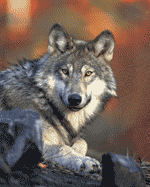
 For millennia no other animal challenged man's fantasy as much as the Wolf. The Wolf (Canis lupus) served as the perfect example for evil in fairytales and fables. Nowadays Wolves are often transfigured as noble animals. What is the origin of this special attitude of man to Wolves? Since Wolves are at the top of the food chain, the paths of humans and Wolves crossed again and again. At times when humans were still leading their lives as hunters and collectors, Wolves were among their major competitors for food. When they settled down and started raising cattle, it was again the Wolf which threatened their herds; the cattle was easy to hunt since it lost its natural escape behaviour. From the Wolves' point of view it made sense to search for nearness to the herds and thus to humans. But Wolves have never been a direct danger to humans. There are hardly any serious reports of free living Wolves attacking humans.
Keywords: gray
The Arctic wolf, gray wolf, grey wolf, mexican wolf, plains wolf, timber wolf, tundra wolf is listed as Least Concern. Does not qualify for a more at risk category. Widespread and abundant taxa are included in this category, on the IUCN Red List of Threatened Species
Namings for the gray wolf
A young / baby of a gray wolf is called a 'cub, pup or whelp'. The females are called 'bitch or fae' and males 'dog or brute'. A gray wolf group is called a 'pack or rout'.Countries
Afghanistan, Albania, Armenia, Austria, Azerbaijan, Belarus, Belgium, Bhutan, Bosnia and Herzegovina, Bulgaria, Burma, Canada, China, Croatia, Czech Republic, Denmark, Estonia, Finland, France, Georgia, Germany, Greece, Greenland, Hungary, India, Iran, Iraq, Ireland, Israel, Italy, Japan, Jordan, Kazakhstan, Korea, North, Korea, South, Kyrgyzstan, Latvia, Libya, Lithuania, Luxembourg, Macedonia, Mexico, Moldova, Mongolia, Nepal, Netherlands, Norway, Oman, Pakistan, Poland, Portugal, Romania, Russia, Saudi Arabia, Serbia and Montenegro, Slovakia, Slovenia, Spain, Sweden, Switzerland, Syria, Tajikistan, Turkey, Turkmenistan, Ukraine, United Arab Emirates, United Kingdom, United States, Uzbekistan and YemenGray wolf habitats
Artificial / Terrestrial, Bogs, Marshes, Swamps, Fens, Peatlands, Boreal forest, Desert, Forest, Grassland, Hot Desert, Pastureland, Shrubland, Subarctic forest, Subarctic Grassland, Subarctic Shrubland, Subtropical / Tropical Dry forest, Subtropical / Tropical Dry Shrubland, Temperate Desert, Temperate forest, Temperate Grassland, Temperate Shrubland, Tundra and Wetlands (inland)Some facts about the
Gray wolf
Adult weight : 26.625 kg (58.575 lbs)
Maximum longevity : 21 years
Female maturity :669 days
Male maturity : 669 days
Gestation : 62 days
Weaning : 47 days
Litter size : 6
Litters per year : 1
Interval between litters : 365 days
Weight at birth : 0.45 kg (0.99 lbs)
Weight at weaning : 5.25 kg (11.55 lbs)
Links
Hunting dog collars - Why it is so important to get a proper collar for your dog.Dog Incontinence - although difficult, incontent dogs can be treated, this site lists a couple of tricks...
Dog urinary tract infection - how to prevent, treat and what symptoms to look for when dealing with dog UTI.
Cynophobia = the fear of dogs - I can imagine some people being afraid of some dogs, but all dogs... ?

Custom Search