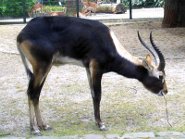
 The Nile Lechwe (Kobus megaceros), pronounced 'letchway', is an antelope found in southern Sudan and western Ethiopia. 'Lechwe' is actually the Bantu word meaning 'antelope'. It is 90-100 centimeters in height (shoulder) and can weigh 70 to 110 kilograms. Nile Lechwe live in marsy environments where they consume aquatic plans. They are active in the early morning and in the late afternoon, when they gather in herds of up to fifty females with one male or an all-male (smaller) group.
Amphibious hooves
The Nile Lechwe can also be called the 'amphibious antelope', because it has adapted to seasonal flooding and the wet grounds. It has exceptionally long hooves compared to other antilopes. While this allows them to jump quickly through the water, it causes them to look clumsy on dry land, compared to other antelopes, and aren't adjusted to life on the open savanna. It is almost always in the shallow water on the edge of deep swamps where the water is between 10-40 centimeters.
There is extreme sexual dimorphism in the Nile lechwe in color and size. Males get much bigger and dark brown, while the females remain blonde dureing their lives.
Talking antelopes
The Nile Lechwe actually produces a lot of vocalizations in the form of snorts and croaks. Females call their calves and the calves have a special call with which they can respond.
Threats
The wildlife in southern Sudan and south-western Ethiopia has been severely affected by civil wars, resettlement of humans, firearms, hunting for meat and water development projects. Nile Lechwe are constrained by the large numbers of cattle during the dry season. The last estimate of the IUCN was between 30,000 and 40,000, and considered low risk.
Picture of the Nile Lechwe by horn2000, licensed under GFDL
Keywords: gray , brown , white , horn , crepuscular
The Nile lechwe is listed as Near Threatened (LR/nt), is close to qualifying for or is likely to qualify for a threatened category in the near future, on the IUCN Red List of Threatened Species
Nile lechwe habitats
Bogs, Marshes, Swamps, Fens, Peatlands, Grassland, Subtropical / Tropical Dry Grassland and Wetlands (inland)Some facts about the
Nile lechwe
Adult weight : 90 kg (198 lbs)
Maximum longevity : 21 years
Female maturity :730 days
Male maturity : 730 days
Gestation : 235 days
Litter size : 1
Litters per year : 1
Interval between litters : 353 days
Weight at birth : 5.1 kg (11.22 lbs)

Custom Search