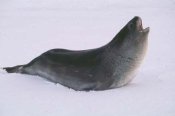
 The Ross seal (Ommatophoca rossii) is one of a kind, it is the only seal whose geographic range is confined to the Antarctic. They are found at areas of average to densely-packed ice, and the places they inhabit are quite isolated, and difficult to navigate through. It is one principal reason why there is just scant data on the habitats, other than the ones I mentioned.
The average Ross seal weighs from 150 to 215kgs, but do not get so impressed with it. Fact is, Ross seals are the most humble of all seals in the Antarctic, size-wise. One has short hair, a dark dorsal surface, a silver ventral surface and on its head/neck, streaks are present. How do we differentiate by sight a Ross seal from its cousins? One is that they have big eyes, which are not in proportion.
The breeding happens in December, while the newborns (the pups) materialize sometime in November, and on the average...just one offspring. A female's reproductive maturity happens on the average, at about 3 years, and the same could be said for the males.
The Ross seal male has been recorded to go to 21 years of age, and the oldest from the distaff side was 19, but of course, it is not impossible that one of these days, we might just see another seal "break the record", so to speak.
What do they survive on: fish and squid beaks are among them. Experts have come up with these figures as far as breaking down their "diet" is concerned: cephalopods (64%), fish (22%) while other forms of invertebrates would go down as 14%.
Did you know you can distinguish seals from sea lions by looking at their ears? Visible ear flaps are absent with seals.
The Ross seal is listed as Least Concern (LR/lc), lowest risk. Does not qualify for a more at risk category. Widespread and abundant taxa are included in this category, on the IUCN Red List of Threatened Species
Namings for the Ross seal
A young / baby of a Ross seal is called a 'pup'. The females are called 'cow' and males 'bull'. A Ross seal group is called a 'pod, colony, crash, flock, harem, bob, herd, rookery, team or hurd'.Countries
AntarcticaSome facts about the
Ross seal
Adult weight : 177 kg (389.4 lbs)
Female maturity :1095 days
Male maturity : 1278 days
Gestation : 228 days
Weaning : 30 days
Litter size : 1
Litters per year : 1
Weight at birth : 20 kg (44 lbs)

Custom Search