Subscribe to
"Animal of the day"

AddThis Feed Button
Or subscribe by e-mail

Enter your Email


Powered by FeedBlitz

We hope that reader will gain an increased appreciation of the need for more conservation measure in order to protect the beautiful creatures that inhabit the earth. Our philosophy is that the more we learn about animals, the more we respect them and take better care of them. That is why we update this blog with new animals, We encourage you to syndicate our content by adding "animal of the day" to your own blog! (read more)

About us

Our mission is to get people excited about animals and their welfare by writing articles on these animals. We encourage people to comment on posts and share with others. Don't forget to subscribe to our feed.

Contact us
Copyright notice

Funny animal videos and pictures

Swimming with manatees - harmful or helpful

Last Comments

Erik (Narwhal - The Wha…): Awesome! I had not heard …
Matty (Pudu - smallest d…): Look, I know they are cut…
Doro (Fattest cat in th…): check out fat-animals.com…
dylan barker (Pink fairy armadi…): i acctually think that th…
Lindsay (Fattest cat in th…): this cat is not to fat my…
Tima (Bottlenose dolphi…): J. David Smith, Ph.D., a …
Coda Plant (Pudu - smallest d…): Hey. I live in Northern C…
Michael Newton (Koala video): i love you mr. koala
Tohru (Asian Golden Cat): I hate them too! They are…
tiffany (Asian Golden Cat): i love this cat i’m doing…

Calendar

« November 2009
S M T W T F S
1 2 3 4 5 6 7
8 9 10 11 12 13 14
15 16 17 18 19 20 21
22 23 24 25 26 27 28
29 30          

Archives

Next Archive Previous Archive

01 Nov - 30 Nov 2009
01 Oct - 31 Oct 2009
01 Sep - 30 Sep 2009
01 Aug - 31 Aug 2009
01 Jul - 31 Jul 2009
01 Jun - 30 Jun 2009
01 May - 31 May 2009
01 Apr - 30 Apr 2009
01 Mar - 31 Mar 2009
01 Feb - 28 Feb 2009
01 Jan - 31 Jan 2009
01 Dec - 31 Dec 2008
01 Nov - 30 Nov 2008
01 Oct - 31 Oct 2008
01 Sep - 30 Sep 2008
01 Jul - 31 Jul 2008
01 Jun - 30 Jun 2008
01 May - 31 May 2008
01 Apr - 30 Apr 2008
01 Mar - 31 Mar 2008
01 Feb - 28 Feb 2008
01 Jan - 31 Jan 2008
01 Dec - 31 Dec 2007
01 Nov - 30 Nov 2007
01 Oct - 31 Oct 2007
01 Sep - 30 Sep 2007
01 Aug - 31 Aug 2007
01 Jul - 31 Jul 2007
01 Jun - 30 Jun 2007
01 May - 31 May 2007
01 Apr - 30 Apr 2007
01 Mar - 31 Mar 2007
01 Feb - 28 Feb 2007
01 Jan - 31 Jan 2007
01 Dec - 31 Dec 2006
01 Nov - 30 Nov 2006
01 Oct - 31 Oct 2006
01 Sep - 30 Sep 2006
01 Aug - 31 Aug 2006
01 Jul - 31 Jul 2006
01 Jun - 30 Jun 2006
01 May - 31 May 2006
01 Apr - 30 Apr 2006
01 Mar - 31 Mar 2006
01 Feb - 28 Feb 2006
01 Jan - 31 Jan 2006
01 Dec - 31 Dec 2005
01 Sep - 30 Sep 2005
01 Aug - 31 Aug 2005
01 Jul - 31 Jul 2005

Animal posters
Animal pictures
Mammals.start4all.com
Animal diversity web
Recently extinct animals forum
PetLvr.com
Another chance to see
Happiness is a warm puppy

Miscellany

AddThis Feed Button

« Bighorn sheep | Home | Nile lechwe »

Aoudad

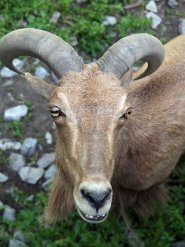
AoudadAn Aoudad (Ammotragus lervia) can range from 1.3 to 1.65 meters in length, with a tail length of 15 centimeter, and its weight ranges from 30 to 145kgs. The Aoudads' outer coverings are red or sandy brown. Bother sexes have a heavy covering of hair at the throat's area, but for the male, this covers its front feet and chest. The Aoudad has very thick, triangular-based horns. Their horns have rings, and as the Aoudad gets older, worn down, which gives a smooth facade. They live in the rocky mountains of North Africa.

The Aoudad has a gestation period of 160 days, and the average number in a litter is just one. Although it has been recorded that in rare occasions, they could go to three. The longevity of an Aoudad is 20 years, give or take a year or two. Breeding can occur at any time within the year, but the peak goes from September to November.

Principally, this is a desert dweller, and they are most busy at the cooler hours of the dusk/dawn, and they seek refuge during the day's heat. Talking of sure-footed animals, this animal is surely one, they can jump 2 meters without difficulties. They usually get water from the foods they get, but if water is within reach, they also drink. Their diet consists of lichens, acacia and grass. The leopard is their natural predator.

In North Africa, their numbers are dwindling, but they have been introduced to southern US and parts of Spain. Their numbers in this part of the world has been increasing so much, that they have begun infringing on the territories of the indigenous desert bighorn sheep.

Oh...this you should know, the word is pronounced as "Ow-dad", and this is the name used by the North African tribe of Berbers.

Interesting fact: The newborns are capable of traversing rocky hills just (almost immediately) after being born.

Picture of the Aoudad by Andrzej Barabasz (Chepry), licensed under GFDL


Add your thoughts about this animal:

You can help spreading the word about this animal by stumbling it by pressing this link StumbleUpon or
  
Remember personal info?

Emoticons / Textile

To be able to comment you are asked to answer this silly question. This question baffles automated spam bots, but fortunately for you it is a simple question, i hope.
 

  ( Register your username / Log in )

Notify:
Hide email:

Small print: All html tags except <b> and <i> will be removed from your comment. You can make links by just typing the url or mail-address.
Animal of the Day
Subscribe to the
animal of the day
Enter your Email


Powered by FeedBlitz

Add "Animal of the day" to your blog

A new feature has been set up for your
site: "Animal of the Day", you can add this to your website by copying the code. An example of how
this would look like and the code to be added can be found here.

63 comments - Permanent Link