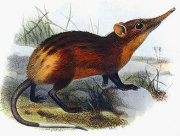
 The Golden-rumped Elephant Shrew (Rhynchocyon chrysopygus) is named after its unique golden-hued fur at the rump's area. Just like its relatives, the snout of Golden-rumped Elephant Shrews are flexible and pointed. A Golden-rumped Elephant Shrew's coat is rough but glossy. A thick skin exists under the rump, and is three times as thick as the skin on the back's middle, and this forms as a kind of shield for the Golden-rumped Elephant Shrew. Experts and researchers say that this is a shield against the biting of another shrew when they fight.
 They are found in coastal areas, and they would most probably be found in moist forest areas and in semi-deciduous forests. Actually, these shrews are among the biggest of the elephant shrew world. They are endemic to Kenya, but a scattering could be found in areas of Mombasa and the Somali border territories.
They are basically monogamous, couples reside in ranges and they are territorial when it comes to these homes. Diurnal in nature, they could sleep during the night at a nest on the forest ground. The Golden-rumped Elephant Shrew's diet consists of worms, insects, millipedes and even spiders. They of course forage on the forest/jungle floor via their flexible noses. When they are not busy eating, they could be very busy running for their lives though. A Golden-rumped Elephant Shrew has its share of predators, such as eagles, cobras and the black mambas.
Keywords: black
The Golden-rumped elephant shrew, golden-rumped sengi is listed as Endangered (EN), considered to be facing a very high risk of extinction in the wild, on the IUCN Red List of Threatened Species
Countries
KenyaGolden-rumped elephant shrew habitats
Forest, Shrubland, Subtropical / Tropical Dry forest and Subtropical / Tropical Dry ShrublandSome facts about the
Golden-rumped elephant shrew
Adult weight : 0.54 kg (1.188 lbs)
Maximum longevity : 11 years
Female maturity :38 days
Gestation : 42 days
Weaning : 15 days
Litter size : 1
Litters per year : 5
Interval between litters : 81 days
Weight at birth : 0.08 kg (0.176 lbs)
Weight at weaning : 0.18 kg (0.396 lbs)

Custom Search