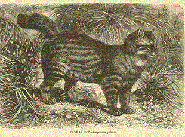
 The Pampas Cat (Oncifelis colocolo) can be seen peeking through the grasslands of South America, especially in Brazil, Chili, Ecuador, and Argentina. This creature remarkably resembles the domestic house cat. Although, do not get up close and personal with it, a trip to a medical center would not be what the doctor ordered.
Although they reside mostly in grassy areas, they are known to lurk in humid forests, open woodlands, savannas, mangrove swamp areas and dry thorn scrubs. The Pampas Cat's coat differ in thickness from habitat to habitat. They will have a thicker coat in the colder area, while their fur will thin out in the warmer areas. Their color ranges from yellow to gray to brown and may be spotted or unmarked.
Pampas Cats have a diverse diet. Just like any of the feline species, they are meat eaters. They have been seen eating a diet of small nocturnal mammals, ground nesting birds, penguins, penguin eggs, lizards, large insects and domestic livestock.
The size and weight of the Pampas Cat varies, just as any other species of animals. They can weigh anywhere from 6 to 15 pounds or 3-7 kg. This compares to the average weight of a house cat. The Pampas Cat varies from 12 to 14 inches, or 30-35cm. Also, the lifespan is very similar to that of the house cat.
The Pampas Cat has not been studied much, very little else is know about them. They are not a full fold endangered species, but the cutting down of the woodland area are making them less populated. The Pampas Cat is listed on Appendix II of the Convention on International Trade in Endangered Species or CITES.
The only known predator to these kitties are humans. The trade of Pampas Cat pelts was suspended in 1987, hopefully dwindling the killing of these animals. Peru has regulated hunting of these precious cats, but Brazil and Ecuador has not. Hunting is prohibited in Argentina, Bolivia, Chile and Paraguay.
Picture of the pampas cat by Kevin Deacon, licensed under GFDL
The Chilean pampa cat, pampas cat is listed as Near Threatened (NT), is close to qualifying for or is likely to qualify for a threatened category in the near future, on the IUCN Red List of Threatened Species
Namings for the pampas cat
A young / baby of a pampas cat is called a 'kitten'. The females are called 'queen' and males 'tom '. A pampas cat group is called a 'clowder, clutter, pounce, kindle (young), embarrassment (young),'.Pampas cat habitats
Desert, Dry savanna, Savanna, Shrubland, Subtropical / Tropical Dry Shrubland and Temperate Desert
Custom Search